
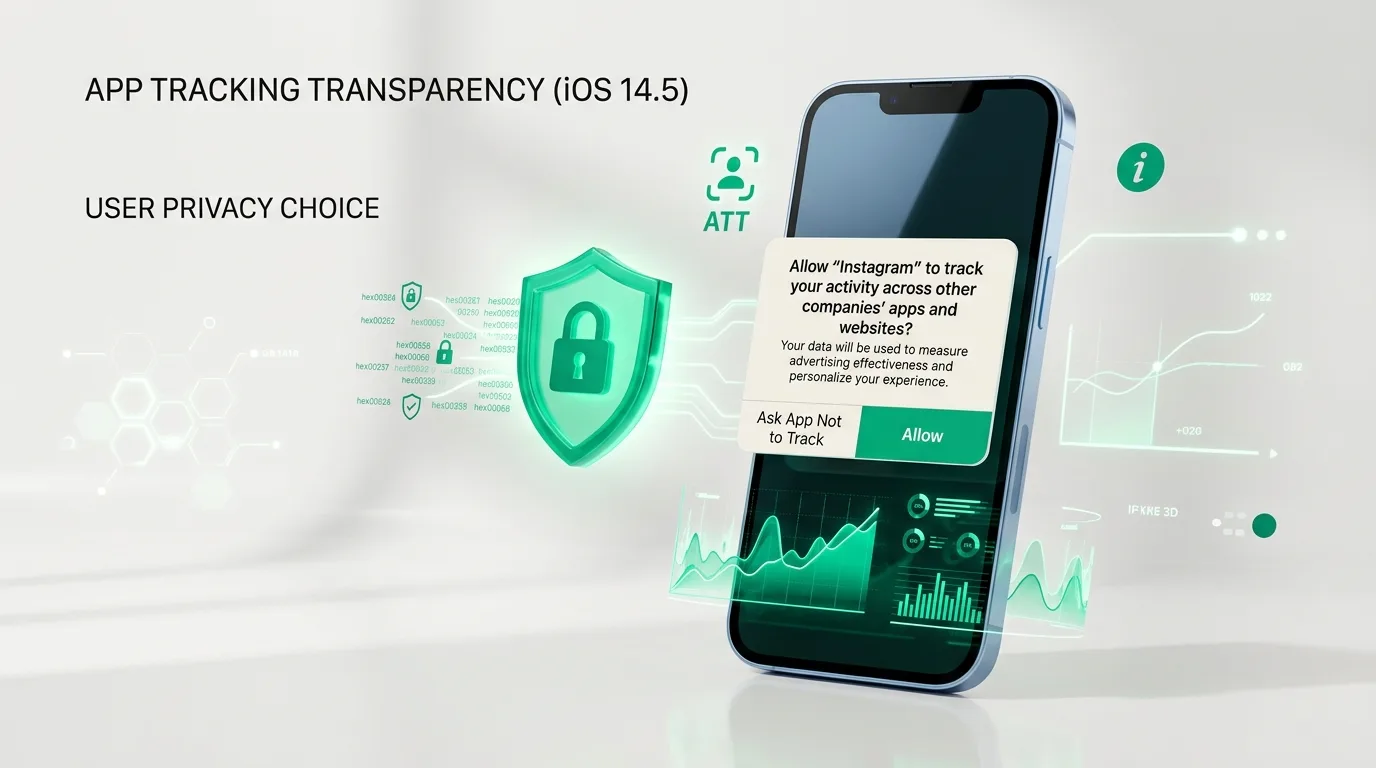
A historical analysis of the Apple App Tracking Transparency (ATT) launch in April 2021. This milestone marked the decline of third-party cookies. Today, data accuracy is guaranteed through Server-Side tracking, Meta CAPI, and Google Consent Mode v2. Learn more about our data and analytics automation solutions.
Key Takeaways
- The Major Turning Point: With the release of iOS 14.5, Apple introduced App Tracking Transparency (ATT), prompting every user with a dialog box asking whether to allow apps to track their activity.
- Data Loss: Projections showed that 70% to 85% of users would opt out of tracking, directly disrupting the performance of traditional pixels and remarketing lists.
- The Response: Advertising platforms (Google Ads, Meta) shifted toward conversion modeling, machine learning, and first-party data.
- Action Today: Businesses must implement domain verification, server-side measurement (Server-Side GTM), and Google Consent Mode.
In late April 2021, the world of technology and digital marketing experienced one of the biggest upheavals of the decade. Apple officially launched the iOS 14.5 update, featuring the App Tracking Transparency (ATT) framework as its core element. From this moment on, every app - including Facebook, Instagram, TikTok, and Google - is required to ask for direct user permission before tracking activity across other websites and apps for advertising purposes.
To most advertisers, this sounded like an alarm bell. Previous methods where third-party cookies and mobile advertisers IDs (IDFA) automatically recorded every purchase and built precise audience segments lost a massive amount of efficiency overnight. However, this is not the end of digital marketing - it is a transition to a new, privacy-first measurement standard.
What Exactly Is ATT and Why Does It Affect Every Advertiser?
Until now, every Apple device had a unique advertising identifier - IDFA (Identifier for Advertisers). Ad platforms used it to link an ad click to a subsequent in-app purchase or web browser conversion. With iOS 14.5, access to IDFA became an opt-in choice rather than a default:
- Pop-up Alert: When opening an app, the user sees a clear choice: "Allow Tracking" or "Ask App not to Track". Most people choose to block tracking.
- Delayed and Aggregated Data Transfer: Apple uses the SKAdNetwork framework for data transmission, passing data with a 24 to 72-hour delay without personal association to the user and device.
- Shrinkage of Remarketing Audiences: Because Apple users are no longer continuously linked to pixels, traditional dynamic remarketing lists become significantly smaller.
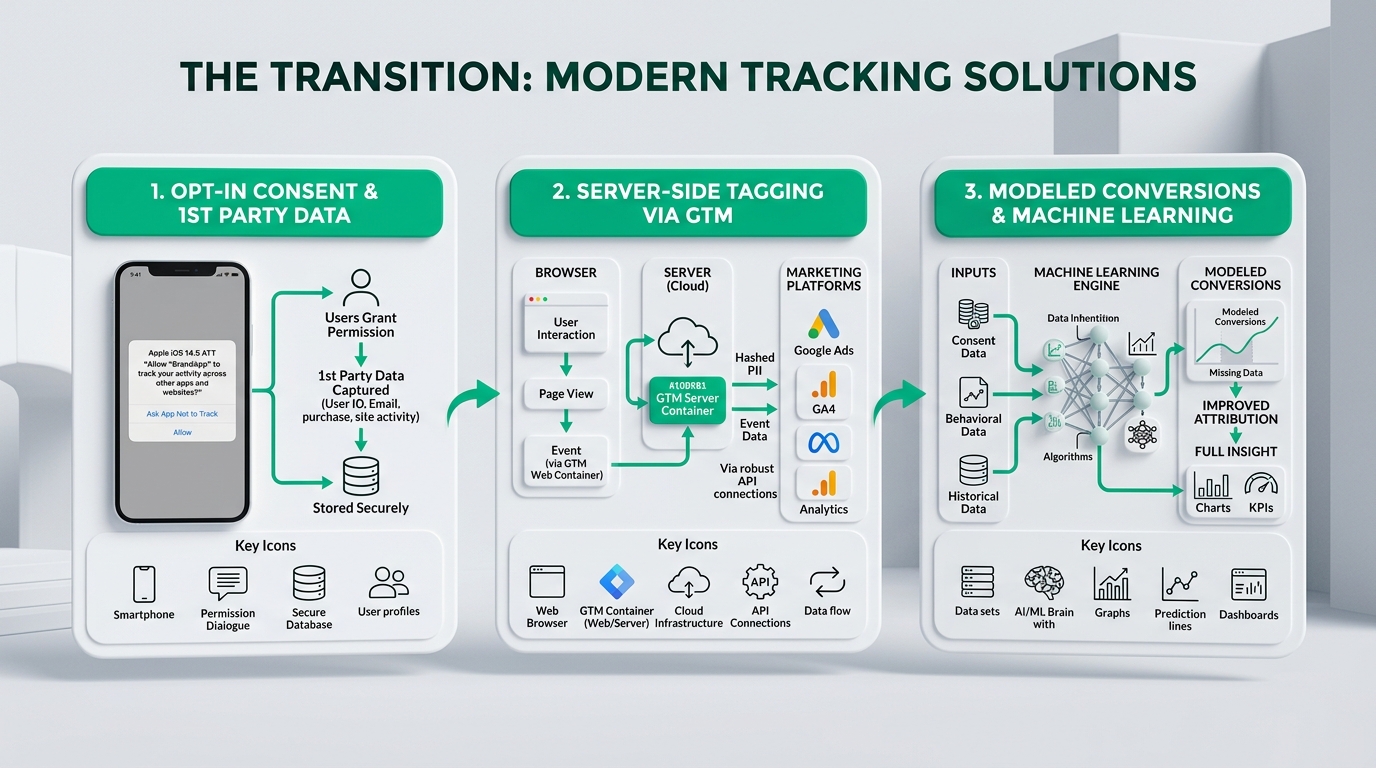
How Are Google Ads and Other Major Platforms Responding?
Although social media ads experienced the most direct impact, Google Ads management also underwent substantial adjustments. Google previously announced it would not ask for ATT consent in its iOS apps, but would phase out IDFA usage, investing heavily in alternative solutions instead:
- Modeled Conversions: Using machine learning, Google calculates the behavior of users who opted out of tracking based on aggregated data from similar users. As a result, reports show modeled data rather than emptiness.
- Google Consent Mode: A mechanism integrated into website code that adjusts Google tag behavior according to user cookie consent. If a user declines marketing consent, only cookieless pings are sent for data modeling.
- First-Party Data and Email Matching (Enhanced Conversions): Data entered at the time of purchase (hashed emails, phone numbers) is securely sent to the system to restore the missing link between ad view and purchase.
Video Analysis: What ATT Really Is and What It Means for the Industry
We invite you to watch a detailed video explanation from the time iOS 14.5 reached user hands:
How Businesses Should Act: 4 Steps to Data Stability
To ensure campaign efficiency does not suffer and budgets are not spent blindly, specific technical and strategic improvements must be implemented:
- Implement Server-Side Google Tag Manager: Client-side browser tracking is becoming unreliable. By moving data routing to your own cloud server (e.g., Google Cloud or AWS), you maintain full control over what data is passed to ad networks, bypassing browser blockers.
- Activate Enhanced Conversions: Turn on the enhanced conversions feature in your Google Ads account, which helps recover up to 10-15% of lost conversion data.
- Build Your Customer Database (First-Party Data): The most valuable assets become loyal customer emails, phone numbers, and registered profiles. Invest in email newsletters, loyalty programs, and personalized content supported by professional web development.
- Check Website Analytics Health: Order a professional analytics and technical audit to ensure all measurements, goals, and e-commerce events are recorded correctly and without data duplication.
Frequently Asked Questions (FAQ)
Does iOS 14.5 completely stop Google Ads search advertising?
No. Google Search Ads are primarily based on user active intent and entered keywords rather than previous behavioral profiling. Therefore, search campaigns are much more resilient to privacy changes than social media ads or display network remarketing.
What are modeled conversions, and can they be trusted?
Modeled conversions are statistically calculated data where machine learning algorithms use historical data, device types, browser signals, and the proportion of consenting users to fill missing gaps. Google regularly calibrates these models against real transactions, making them provide a much truer big picture in reports than incomplete raw data.
Why do reports show data delays of up to 72 hours?
This is Apple's SKAdNetwork security mechanism. To prevent immediate user re-identification based on precise purchase timestamps, Apple intentionally sends conversion signals with a random time delay from 24 to 72 hours. Advertisers must note that today's campaign results will only fully reflect after 3 days.
Will Android introduce similar restrictions in the future?
Yes, the entire industry is moving toward strengthening privacy standards. Google is already working on the Privacy Sandbox initiative for the web and Android environments, and third-party cookie support will be gradually restricted across all browsers. Businesses that organize their first-party data architecture in a timely manner will gain a strong competitive advantage.
Want to regain full data control over campaign conversions and purchases?
Book a 15-minute strategy call. We will help you implement Server-Side measurements and secure data exchange with advertising platforms.
Fixed budget. No hidden extra fees or forced services.