
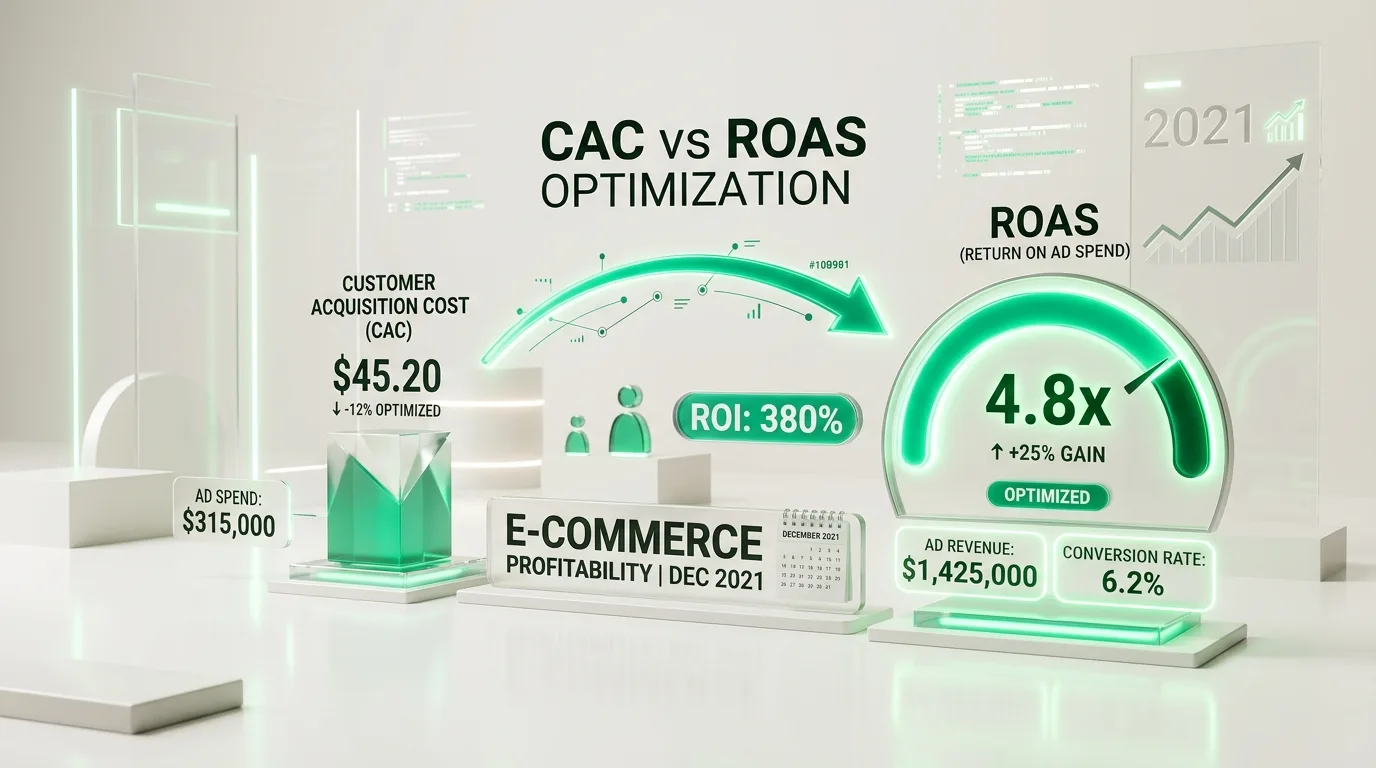
A historical analysis from December 2021 regarding click cost spikes and margin protection. Today, we evaluate campaign profitability using profit-based bidding (POAS) and marketing efficiency ratio (MER). Explore our Google Ads solutions or calculate your budget estimate using our interactive calculator.
Key Takeaways
- Auction Inflation: In December, competition for shopper attention reaches its annual peak, driving up cost-per-click (CPC) in popular niches by 40% to as much as 80%.
- Revenue is Not Profit: High ROAS (Return on Ad Spend) can create a false sense of security if product cost, discounts, and customer acquisition cost (CAC) are ignored.
- The LTV Factor: Acquiring a customer in December with zero profit is justified only if the company has a clear post-sale strategy for repeat purchases in January and February.
- Delivery Deadline Threshold: After the last guaranteed courier delivery date (around December 18-20), campaigns must immediately shift toward gift cards and local store pickup.
December is traditionally the hottest month for e-commerce and retail. Shoppers rush to buy Christmas gifts, carts fill up faster than usual, and campaign dashboards flash impressive revenue numbers. However, December is also the period when the most businesses unintentionally burn their real profit in expensive advertising auctions.
When all market players simultaneously fight for the exact same buyer, the cost-per-click (CPC) and cost-per-thousand-impressions (CPM) skyrocket. If you blindly follow revenue rather than your actual customer acquisition cost (CAC) and profit margin during this time, you may find at the end of the month that your massive turnover left zero net profit. Here is how to maintain profitability under December auction pressure.
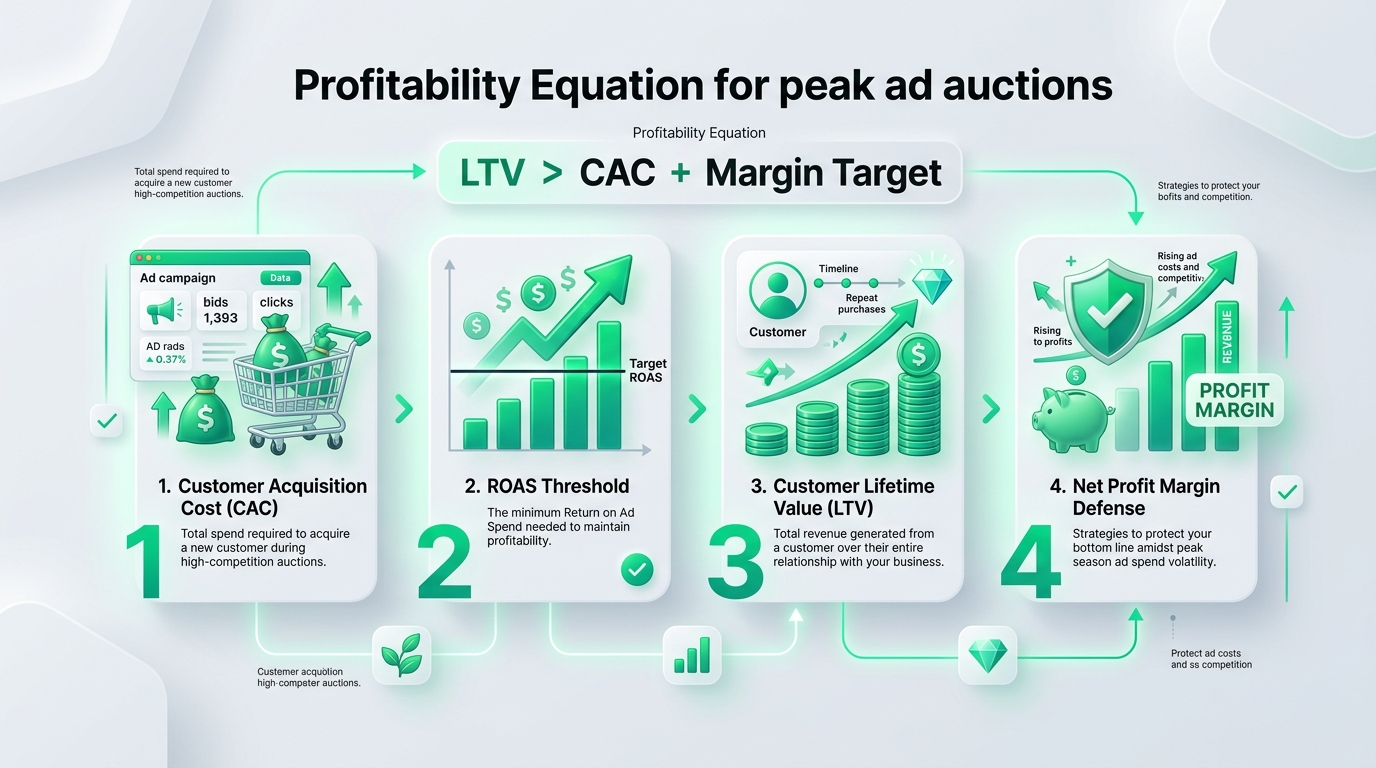
The December Profitability Formula: CAC vs. LTV and Margin
To make sound advertising budget decisions, every e-commerce manager must know their business break-even return threshold (Break-Even ROAS):
- Break-Even ROAS Calculation: If your average product markup margin is 40%, your break-even threshold is 250% ROAS (1 / 0.40). This means that at a 250% ROAS, you are merely covering the product cost and ad bill without making a profit.
- CAC (Customer Acquisition Cost): The total advertising expense spent to acquire a single actual buyer. If acquiring a new customer costs 35 EUR while the average basket profit is 25 EUR, the transaction generates an immediate loss.
- LTV (Customer Lifetime Value): An exception applies when a customer makes multiple repeat purchases throughout the year. If you know that 40% of December buyers will return in the spring, a higher CAC on the first purchase is a justified investment.
How to Manage Google Ads Campaigns During the December Peak
To keep your advertising budget profitable until the very last day of the year, follow these four principles:
- Turn Off Low-Margin Product Campaigns: If a product has a slim profit margin (e.g., 15-20%), high December click prices will make these purchases unprofitable. Shift your budget toward high-markup items with high basket value.
- Focus on Remarketing and Existing Customers: Warm audiences (people who have already visited the store or purchased previously) convert much cheaper than completely cold traffic. Increase your budget share for dynamic remarketing and Customer Match list uploads.
- Use Target ROAS with Strict Guardrails: Entrust bidding to Smart Bidding, but set a sufficiently high Target ROAS goal so the algorithm does not overpay for low-value clicks.
- Adapt Messaging to the Delivery Schedule: After December 18, people fear most that gifts will not arrive on time. Highlight "Pick up today in store" or "Digital gift card with instant email delivery" in your ad copy.
Video Insights: 5 Quick Steps to Boost E-commerce Profitability
Watch practical advice on how to optimize ad campaigns and maximize net profit in your online store campaigns:
Prepare for the January Bounce-Back
December ends quickly, and in January, advertising costs drop sharply as competitors turn off their budgets. This is a great time to activate a new buyer base with low click prices and offer accessories or add-ons for products received as gifts.
Professional Google Ads management will help you navigate through all seasonal fluctuations without unnecessary losses. Meanwhile, thoughtful web development and regular SEO audits will ensure a solid organic traffic foundation that delivers orders even when paid auctions become too hot.
Frequently Asked Questions (FAQ)
Should you completely turn off ads during the last week of December?
Completely turning off campaigns is not recommended because it resets smart bidding algorithm learning data. Instead, reduce budgets by 40-50% or redirect campaigns toward post-holiday sales and gift cards that have no physical delivery constraints.
Why does my ROAS drop in December even with a high number of orders?
This happens because click costs (CPC) in auctions grow faster than average basket value. If click price increases by 70% but basket size grows by only 10%, ROAS mathematically decreases. In this situation, you must critically monitor on-site conversion rates and exclude unprofitable search queries.
How to handle returned products in December campaign analysis?
During the holidays, the product return rate often increases (especially in apparel and footwear categories). To get a true picture, marketing efficiency calculations must factor in the average historical return rate from the start (e.g., -15% of gross revenue).
How best to advertise gift cards at the last minute?
From December 21 to 24, run a dedicated Search campaign targeting queries like "gift card", "last minute gift", and "electronic gift card". Clearly promise email delivery within 2 minutes in your ad copy to attract shoppers who missed physical shipping deadlines.
Want to protect your business profit margin during expensive ad auctions?
Schedule a 15-minute consultation. We will help you implement profit-based bidding strategies and control customer acquisition cost (CAC).
Fixed budget. No hidden extra fees or forced services.