
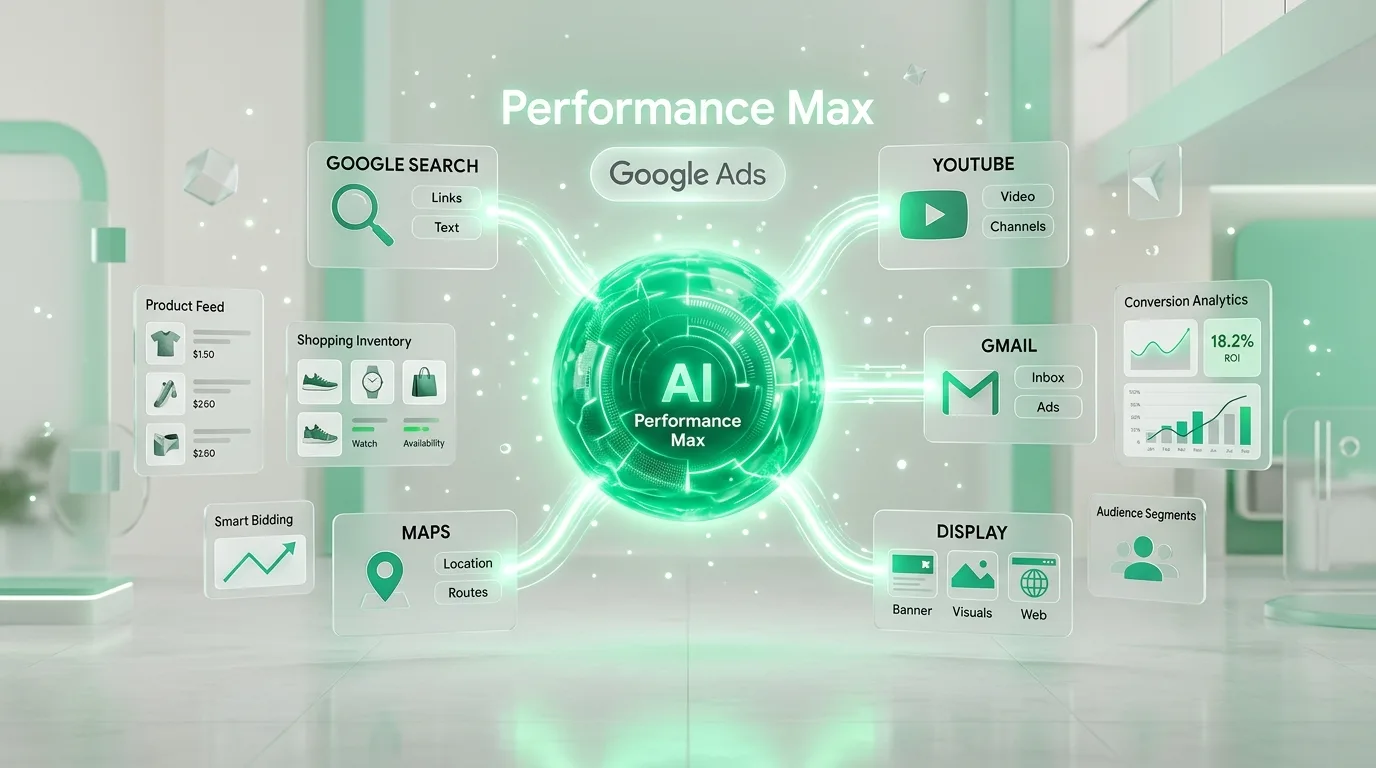
A historical guide regarding the transition of e-commerce stores from Smart Shopping to Performance Max in the autumn of 2022. Today, PMax campaigns are the primary sales engine for e-commerce, which we supplement with advanced product feed optimization and negative keyword filters. Learn more about our Google Ads services and e-commerce development.
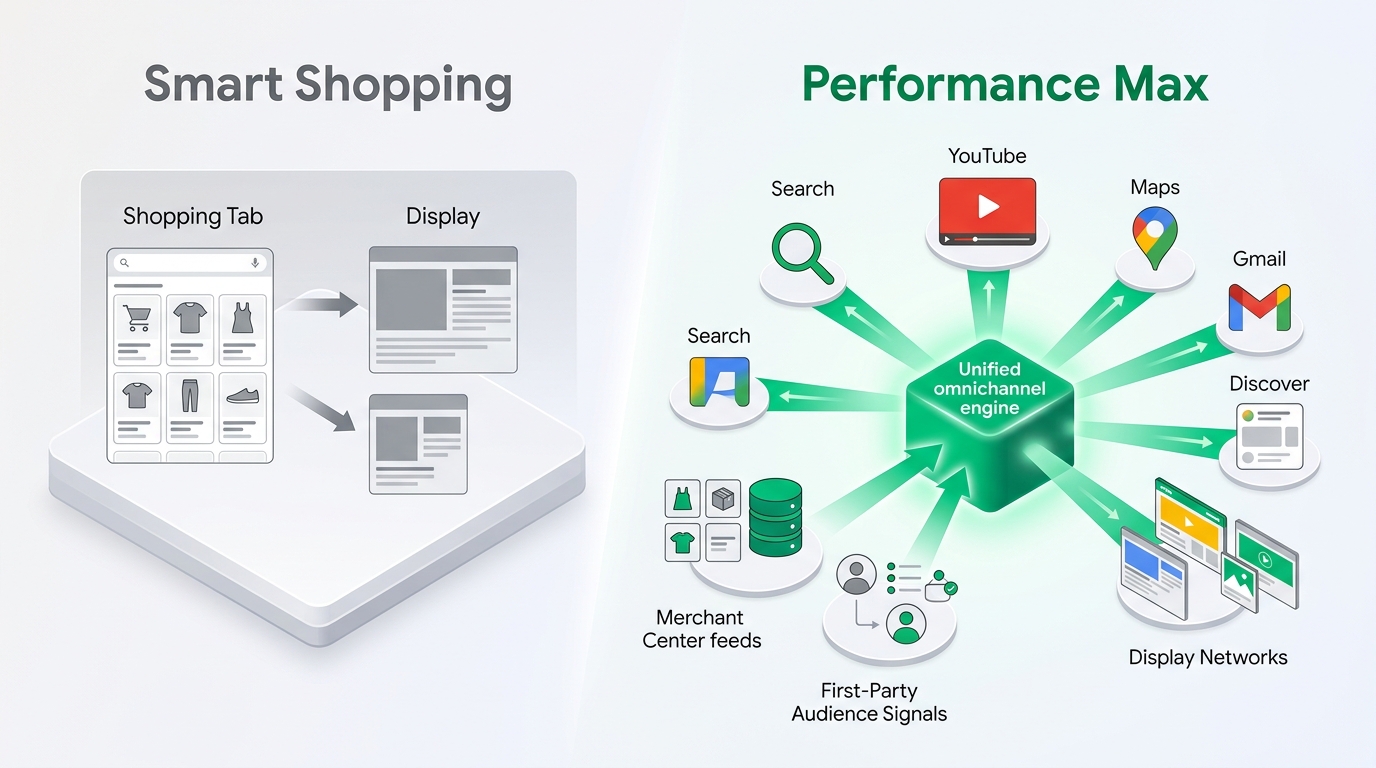
September 2022 will go down in e-commerce history as the moment Google officially completed the automatic migration of legacy Smart Shopping campaigns to the new Performance Max (PMax) format. For many merchants, this transition caused genuine shock: instead of familiar and predictable Shopping campaigns, they were faced with a single, all-encompassing "black box" that combines Search, Google Shopping, YouTube, Gmail, Discover, and the Display Network. However, the dominance of the algorithm does not mean we have lost the reins - the control mechanisms have simply moved to a different level.
Key Takeaways
- All channels in one campaign: PMax replaces the traditional split into separate Shopping and Display campaigns, automatically shifting budget to auctions with the highest conversion probability.
- Feeding the AI: The cornerstone of PMax success is precise Audience Signals and a clean product data feed (Merchant Center feed).
- Brand cannibalization risk: Without requesting negative keyword lists from Google support, PMax often spends budget on the company's own brand searches, creating an illusion of artificially high ROAS.
- Asset group segmentation: The best results are achieved by segmenting products based on their actual profitability and profit margins, rather than simple product categories.
Performance Max Architecture and Channel Consolidation
Until now, digital agencies and marketing managers built complex campaign pyramids: a separate Search campaign for high-intent queries, Smart Shopping for dynamic product cards, Display for brand awareness, and YouTube for remarketing. Each campaign had its own budget, bids, and performance goals.
Performance Max eliminates this fragmented approach. Instead, Google offers a unified, goal-oriented campaign where the machine learning model analyzes hundreds of thousands of real-time signals in every auction. The algorithm decides whether it is better to show a specific shopper a product card at the top of the search results, a video ad during a YouTube break, or a reminder in their Gmail inbox.
The Three Most Dangerous Mistakes in Implementing New Campaigns
Experience shows that by leaving campaigns entirely on autopilot, e-stores often experience a drop in profitability. Here are the three most critical risk points that require increased attention:
1. Lack of negative keywords for brand terms. By default, PMax loves the path of least resistance. If your company name is recognizable, the algorithm will gladly direct most of the budget to people who are already searching for your store. As a result, reports show a fantastic ROAS (e.g., 1200%), but the influx of new customers has stalled. To prevent this, you must contact Google support and request the addition of an account-level negative keyword list to your specific PMax campaign.
2. Dumping all products into one Asset Group. If an e-store has products with a 10% margin and products with a 60% margin, they should not live in the same campaign with the same Target ROAS goal. PMax will quickly find the cheapest products with the easiest conversions and spend the entire daily limit there, neglecting high-profit categories.
3. Leaving weak or automatically generated video assets. If high-quality video materials are not manually added to the campaign, Google will automatically create slideshow videos from your product images with robotic music. Such ads on the YouTube network look unprofessional and often damage brand credibility.
Practical Video Guide to Setting Up PMax Campaigns
To understand the technical nuances and proper asset group configuration step-by-step, watch this detailed Surfside PPC video material on Performance Max campaign structure:
How to Structure Campaigns for Maximum Profit
To regain control over your digital marketing budget, our experience shows that an optimal PMax architecture is based on a three-tier split:
High-Margin Campaign (Top Performers): This includes only those products that bring in the lion's share of the company's net profit. This campaign is assigned a stable budget and a more aggressive Target ROAS to maximize market share.
Catch-all Campaign: Medium and low-margin products with a more conservative goal, ensuring a steady flow of sales without overspending.
Experimental and Seasonal Group: Dynamically adjustable assets with strong audience signals (Customer Match lists, recent buyers, competitor site visitors), which allow the algorithm to find the right target audience faster.
If you want to organize your company's Google advertising structure and achieve a stable return on every euro invested, check out our advertising and analytics services or contact our team for an individual campaign review.
Frequently Asked Questions about Performance Max
Does Performance Max completely replace standard Search campaigns?
How long does it take for a PMax campaign to learn how to optimize results?
How to prevent PMax from spending money on unwanted searches?
Want to maximize your e-store sales with Performance Max?
Book a 15-minute strategy call. We will help you correctly configure product campaigns and margin control.
Fixed budget. No hidden fees or forced services.