
In 2026, accurate data tracking is only possible through independent server-side (sGTM) infrastructure with full Consent Mode v2 compliance. Learn more in our Server-Side Analytics Architecture.
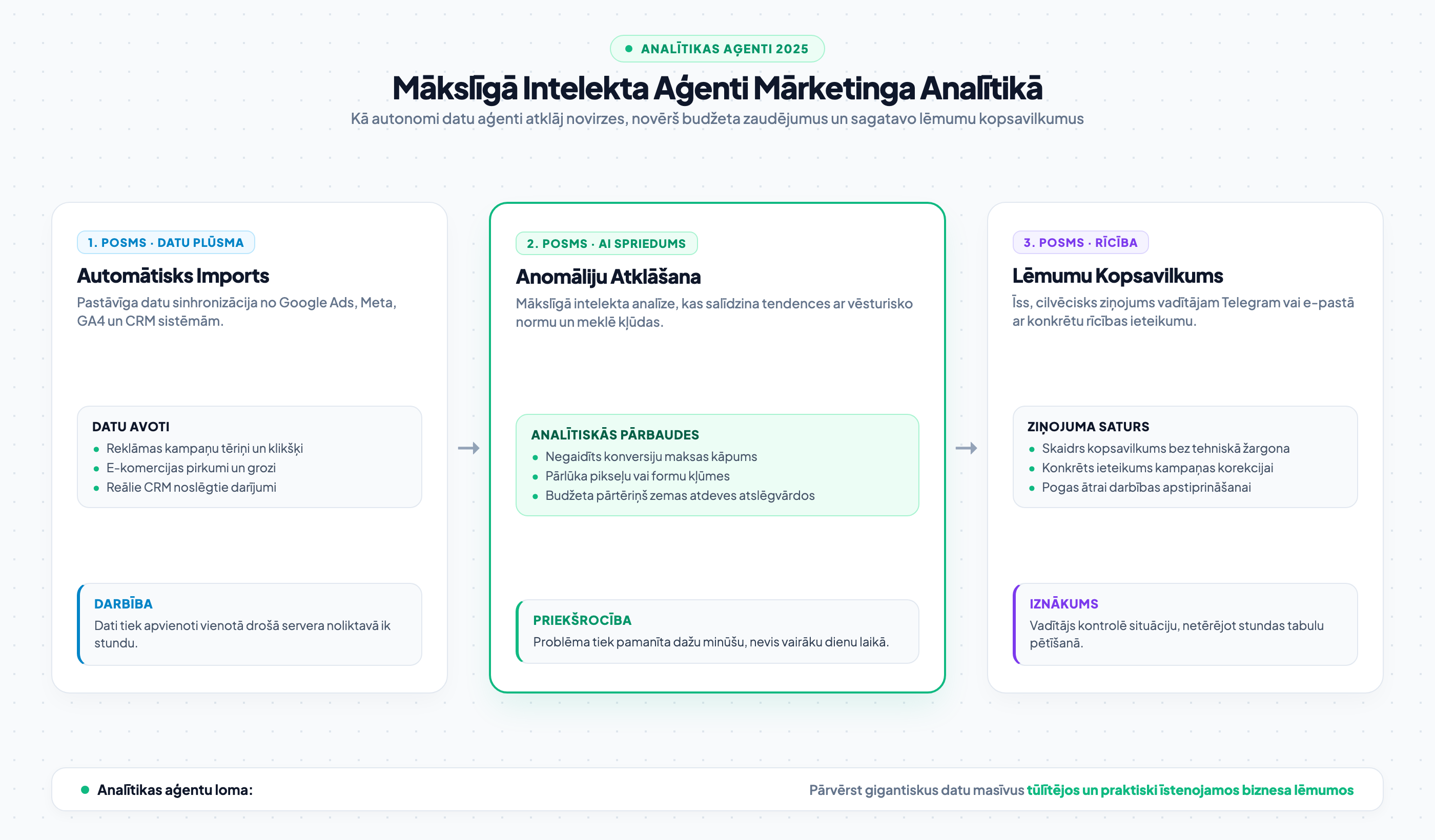
Digital marketing specialists spend hours every day exporting reports from Google Ads, Meta, and GA4 to compare data and look for anomalies. The human eye often notices a problem only after the budget has already been spent. In 2025, autonomous AI analytics agents can monitor data streams in real-time and alert managers before losses occur. In this article, we explain how to implement autonomous analytics.
From Manual Reports to Proactive Monitoring
Most business analytics is retrospective - it shows what happened last week or last month. However, in today's dynamic market, a campaign error, a technical outage in the payment system, or an aggressive bidding jump from competitors can ruin a week's results in a matter of hours. Relying on manual morning spreadsheet checks is simply too slow.
By implementing modern AI analytics tools, the system continuously compares current metrics with the historical norm. If the cost per conversion increases by more than 25% or a specific keyword starts spending budget without results, the agent reacts immediately.