
This is the 4th lesson of the MarketMeNow 6-part SEO course. Technical SEO is the foundation of your website: server configuration, robot files, site maps, and canonical links ensure that Google bots do not get lost in code errors. Learn more about our Technical SEO Audit service.
SEO optimization consists of many different factors, but if we look at the very foundation upon which everything is built, we can safely say it is technical SEO. These are all the technical factors that affect a website. A website is like the foundation of a real house. You cannot build a good house on a bad foundation, and while foundations are usually invisible, they are invaluable. An SEO audit is a service typically offered by all SEO agencies to analyze these issues.
Technical SEO ensures that your website is crawlable, indexable, and secure. Key tasks include configuring robots.txt and XML sitemaps, preventing duplicate content with canonical tags, eliminating 404 errors, and maintaining a secure server response architecture without unnecessary redirect chains.
Website Creation
SEO begins with the creation of the website itself - both the chosen domain name and the hosting (the server where the website is located) are important, as is how the website is built in the end.
The domain is a factor whose influence decreases over time, yet if you want to optimize for Latvia, a .lv domain extension is better; for Lithuania, a .lt domain; for the UK, a .co.uk domain, etc. Experience shows that the domain name is still important. Although Google claims this is no longer the case, domain names containing a keyword perform slightly better than others. However, this is certainly not the deciding factor.
Hosting, or the server where the website is located, as well as reliable website maintenance, is a crucial factor. It affects how fast the website operates and whether every visitor can access it without issues. You should seek expert advice on which server/hosting to choose. For example, it is important that the IP address hosting your website is not shared with dozens, hundreds, or thousands of other websites, which increases the risk of encountering serious SEO barriers. For instance, if a "bad" website from Google's perspective is on the same server.
This is a topic for another time, but it is very important how the website is programmed. Is the solution used SEO-friendly? Is the website light and fast enough, and friendly to the Google search engine? There are more and less friendly website creation solutions, including ready-made ones. An amateur will be able to create a site that is unfriendly to search engines, but professional WordPress website development can make it much lighter and more conducive to SEO optimization.

URL Structure and HTTPS
We can find any website by its URL (Uniform Resource Locator); it is like the precise address of a house. Website URLs start with "http://" or "https://". The "s" at the end indicates that the address has an SSL (Secure Socket Layer) certificate. In layman's terms, this website is more secure. Many hosting providers offer SSL certificates as part of a standard package, but they can also be found/purchased from various services.
Google has for some time defined "https" as an SEO factor that determines the potential of a website's organic results. Therefore, it is a mandatory requirement to set up an SSL certificate for your website.
It is also important to take care of a clean and understandable URL structure for all website sections, subpages, articles, and categories during the development process.
The most common mistake is leaving automatically defined URL structures:
Instead of "www.domain.lv/product-category", you have "www.domain.lv/page=?1234", or instead of "domain.lv/blog-post", you have "domain.lv/blog=1".
In any page's URL structure, it is advisable to include the main keyword of the page, separating words with a hyphen "-" (not an underscore "_").

Navigation
An important SEO factor is website navigation. There is an unwritten rule that you should try to keep everything on the website within a maximum of 3 clicks. This means any page should be reachable within 3 clicks from the homepage. For example: homepage - category - subcategory - product. A distance of 4 clicks is already considered slightly risky for page indexing, not to mention even more complex structures. You would need massive website authority for the Google bot to crawl deeper into the site sections.
Not only for the Google bot but also for website visitors, so-called breadcrumbs are very helpful, as they show exactly what level of the website you are currently on. This helps with moving through website sections more easily.

HTML, Javascript, CSS
Without delving too deeply into these terms, generally speaking, these are programming languages used in the website creation process. HTML is the main language of a website, providing the basic structure that browsers use to display websites. Javascript is often used to display various solutions and additional elements on the page, while CSS is responsible for design, colors, and fonts. Overall, the correct or incorrect use of programming languages can affect a website's SEO potential.
Website Speed
Lately, the most relevant topic SEO specialists talk about is website speed. While it was a factor before, it wasn't as important, but for about a year now, it has been a very significant aspect that Google looks at. There was no consensus on what constitutes a fast page; it was more or less the subjective opinion of each web development agency. Now, Google clearly states: use the Google Page Speed Insights tool, which will tell you precisely how fast the website is and what the main problems are that need to be solved.
The most important indicator from an SEO perspective in the Page Speed tool is the Core Web Vitals test, which is also the first thing that appears in the page analysis results - if this is not passed, you must start there. Afterward, you can look at the ratings for Desktop and Mobile versions and try to increase them.
MarketMeNow's site metrics were low in this tool for a long time (the shoemaker without shoes), but we decided to improve this after it became very relevant. Currently, the MMN website not only passes the Core Web Vitals test but also has very high ratings - 100 for the Desktop version and 93 for Mobile. Developers always find it harder to achieve high mobile performance, so it is normal for it to have a lower rating than the Desktop version.

Mobile First!
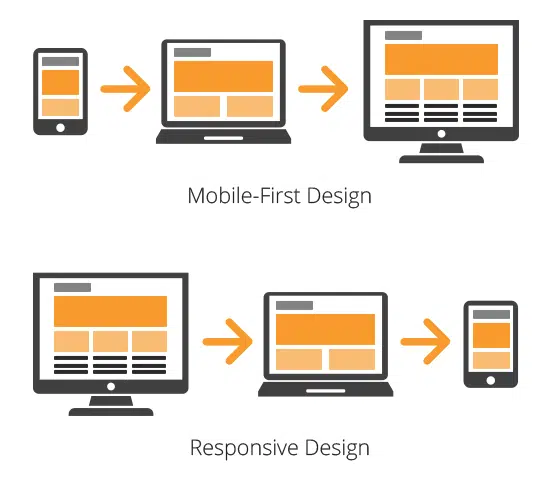
Website developers must take into account that for a long time now, mobile versions have been more important than computer/desktop versions - quite simply, many more people consume the internet on mobile devices and fewer on computers. Many developers still focus on the computer version first and only then on the mobile one, but that is not correct. Even worse - forgetting about the mobile version entirely.
This is important from an SEO perspective also because Google declares it: build mobile-friendly solutions first, otherwise we will not give you good opportunities in the Google search engine even for computer versions.
Duplicate Content
Some might say this is no longer technical SEO! But it is. Often, without the website owner knowing, it is full of duplicate versions of pages that are generated automatically. This most often happens with e-commerce type sites, where products and product categories are available via many paths. For example, copies of a specific product page are available for various filter searches (color, size, etc.), based on search keywords. Categories have multiple pages available. All this creates page duplicates, which prevent Google from recognizing the most important page, and consequently, problems arise in page optimization. Pages also duplicate due to various URLs with dynamic elements. This is also a big problem.
You can solve this by indicating which page is the most important, excluding other copies from the index, or telling Google that a specific page copy is a version of the original page using a canonical tag.

Redirects
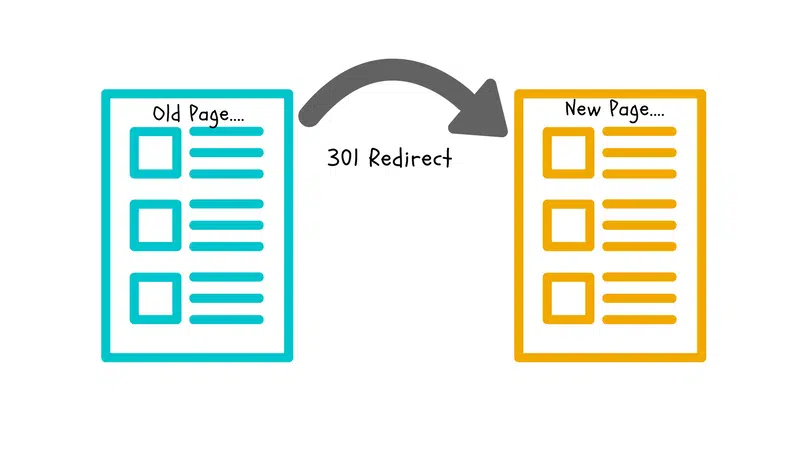
Often, websites have redirect problems - both their absence and incorrect application. Remember that a 301 redirect is SEO-friendly, so it is safer to use that instead of a 302. If there is a need to delete a page, it must be redirected to the most appropriate one, because it is possible that links have been created to it, which send a certain amount of authority to the domain. And besides, Google really does not like empty pages.
Also, if you happen to change your domain, the pages of the old domain must be redirected to the new domain with a 301 redirect - this will be the highest quality migration to a new domain.
There are many other technical factors, such as the "hreflang" tag, 4xx and 5xx status errors, missing Title and Description tags, robots.txt, Sitemaps problems, and many others that we will not cover in this blog post. However, the conclusion is clear: before further optimizing the website with content and off-page optimization opportunities, you must first deal with all technical SEO matters. For new websites, this should be sorted out during the development process, which is why you should collaborate with a web development agency that is knowledgeable in this area or works with an SEO agency that helps with technical issues or performs an SEO audit.
Frequently Asked Questions about Technical SEO
What is a technical SEO audit and how often should it be performed?
A technical SEO audit is a comprehensive check of code, links, server responses, and indexing. It is recommended to perform it every six months or after every major website redesign.
How to properly configure the robots.txt file so as not to block important pages?
The robots.txt file should only block administrative panels and search filter duplicates, ensuring full access to all content pages, CSS styles, and JavaScript libraries.
How to prevent canonicalization and duplicate content errors on the site?
Each page should have a rel=canonical tag set in the header, which clearly indicates the primary original URL address to the search engine.
Want to discover and fix your site's technical errors before they affect your revenue?
Request an independent technical SEO audit. We will prepare a clear action plan for your developers.
Fixed budget. No hidden extra fees or forced services.