

A historical experience story from 2020. Today, we are already in a phase of 16+ years of continuous work with the Google advertising platform. The question about the "autopilot" raised in 2020 has become an everyday reality with Performance Max campaigns and AI bidding, where human strategic thinking and business logic are more important than ever. Learn more about our approach to Google Ads management or request a campaign audit.
Recently, I caught myself thinking that it turns out I have been working with the Google Ads advertising platform, formerly known as Google AdWords, for 10 years already. I am not entirely sure whether to be proud of 10 years of experience or worried that I am getting older. This article will be more about how this advertising tool has globally changed over the years and whether all the changes have made it better.
Since its inception, Google Ads (historically AdWords) has transformed from a simple keyword auction into a complex machine learning ecosystem. Successful specialist work consists 90% of data analysis, mathematical pattern recognition, and strategic business logic, rather than superficial copywriting. Automation provides speed, but profitability is ensured by precise measurement control and human-guided goals.
What is a Google Ads Specialist?
A small detour on the topic of the "Google Ads specialist" - if you think the profession involves an exciting creative flight with epic ad copywriting, creating new cult slogans, etc., then I am afraid I will have to disappoint someone here.
A good Google Ads specialist spends 90% of their time in Excel and other spreadsheet software; a good specialist observes data, tries to understand patterns, and analyzes mistakes. Excellent specialists also know how to synthesize the gathered information to achieve the desired result with the help of Google Ads. The creative process makes up perhaps only 10% of the entire work. Of course, it also depends on the approach.
Google AdWords 2010 vs. Google Ads 2020

I started my first steps with Google AdWords back in 2010. A good friend of mine had already deeply explored the platform at the time and lured me in so that I would also learn AdWords and come work with him. I have to thank him because I took the bait and started learning what Google AdWords is and how it works.
Google AdWords in 2010 does not radically differ from Google Ads in 2020 - yes, several features have been added, some things have been made easier to use, and some are no longer available, but conceptually the core purpose of the tool has not changed - advertising on keyword searches in the Google search engine and showing ads across the Google network of websites.
Google Ads Certifications Used to Cost Money
I started learning Google AdWords by going through a wild amount of PDF files that contained all the theoretical information about AdWords. Afterward, I had to take AdWords exams. At that time, exams differed drastically from their current format.
First of all, attempting a single exam cost 50 USD, which was not a small amount of money back then, but the exam had to be passed so I could start working at my new job. Second, when starting the exam, the computer locked down, and you could not "quickly look up the answer on Google."
The first time I took the exam was very special; there was more anxiety than before exams at school, my hands were shaking while taking the exam, and I silently prayed to myself "please let the power not go out or the computer crash."
When I managed to pass on the first try, the feeling of satisfaction was absolute highest. Today, the number of exams is considerably larger, they are no longer paid, and during the exam, you can freely search Google for answers to all questions. Is this better or worse than in 2010? One could debate that.

Certifications or Practical Skills?
My personal view - if someone comes up to me and says they are a good Google Ads specialist because they have all the certifications, then the first task for this "specialist" would be to create and justify a campaign structure for any random website. That will tell me much more about the specialist than all the certifications combined.
After passing the exams, I started working, operating real Google AdWords accounts. Gradually, confidence in my own abilities began to grow, I got increasingly comfortable with AdWords functions, and I refreshed my rusty Excel knowledge. Experience increased, and I was already able to work directly with clients, challenge their ideas, and justify my strategies and tactics. I had developed my own campaign building structure...
...And Then Came 2013

The time had come when I experienced the first major changes to the Google advertising platform since I had started working in this field.
The campaign structure was changed from so-called Legacy campaigns to Enhanced campaigns. The biggest change that scared me and other specialists I knew at the time was the merging of Mobile and Desktop campaigns into a single campaign.
For those not closely familiar with Google Ads - previously, mobile device traffic campaigns were separate campaigns, isolated from Desktop campaigns, with their own optimized bids and tailored ads.
In the agency where I worked at the time, we were anxious - how would this work, how could we evaluate the results of each device type, would we end up overpaying per click? Google argued this change would make working with AdWords easier for the average person. My view was that Google was going to mess up the work for industry professionals.
Mobile - Leading the Way
Be that as it may, changes naturally happened, and everyone adapted to them. Campaign structures were adjusted, we mastered the new features, and we kept working. I cannot say the changes were good or bad; AdWords simply became different, and I adapted.
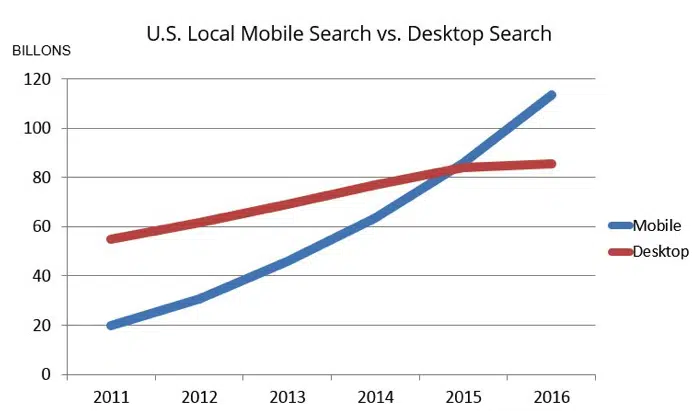
Parallel to these changes, Google increasingly began to emphasize the importance of mobile traffic and how important it was to adapt websites for mobile devices in a timely manner. The task of AdWords specialists was to convince clients of this.
At that time, it personally seemed to me that Google was slightly exaggerating; back then, the traffic proportion in Latvia was approximately 80 to 20 in favor of desktop visits. However, over time my thoughts began to change.
While working with AdWords accounts in the UK and the US, I already noticed situations in some places where this traffic distribution was starting to shift in favor of mobile devices. You do not need to be a great prophet to understand that this trend would sooner or later reach Latvia as well, and my views changed accordingly.
In 2020 in Latvia, the traffic distribution between devices is already approximately 70 to 30 in favor of mobile visits (this figure may differ across various industries).
Automation - Ads Specialist Assistant or Threat?

I do not remember the exact moment, but at some point Google started pushing campaign management automation solutions to the forefront.
Initially, they appeared as Automated rules, which allowed specialists to build their own automation algorithms to apply for campaign optimization. I really liked this feature and used it quite actively, especially for large-scale campaigns where the number of keywords was measured in the thousands.
Google, of course, developed all of this further and started offering automatic optimization options for campaigns where specialist involvement is not required and not even intended. Artificial intelligence figures everything out instead of the specialist. I do not know whether it is my conservative nature or the fact that I watched Terminator too often as a child, but these efforts by Google sparked more negativity than positive emotions in me.
Someone might object here with "you are just scared that you will be replaced by a robot," and subconsciously there is probably a small voice screaming that, but right now it is more because I simply do not believe we have evolved to the point where robots are smarter than ourselves, at least in terms of strategic decision-making.
At our current phase of development, automation tools understand the basics, can calculate data and probabilities, but in my opinion, they cannot yet delve into matters that require emotional intelligence.
I completely admit the fact that automation will only evolve and in time become equivalent to the human mind. A very simple question -
would you step onto an airplane right now where an automated program is in place of the pilot?
A lot has been experienced in 10 years of Google Ads (AdWords), you cannot even remember all of it anymore, so many different details. At the very core, it is clear that Google Ads is evolving, trying to keep up with the times.
Are all changes positive? That depends on how you look at it. What is positive for one can just as easily be negative for another. The main thing is to keep up with changes and find a solution that works for you. You have to think and think again! At least that is what I have tried to do for all 10 years.
Frequently Asked Questions About Google Ads Development and Automation
Can Google Ads automation completely replace a campaign manager?
No. Although Google algorithms automate bidding, they do not know your company's true profit margin, customer quality, and competitive advantages. Without human strategic guidance and proper conversion signals, the algorithm tends to waste budget on low-quality traffic.
Why does 90% of a Google Ads specialist's time go into spreadsheets?
Because Google Ads is a mathematical auction system. Success is determined by precise search query analysis, negative keyword filtering, click cost monitoring, and calculating return on ad spend.
What is the minimum budget for effective Google advertising in Latvia?
In the Latvian market, stable results in service and local business sectors can be achieved with a budget ranging from 300 to 800 euros per month, with a precise focus on high-intent search keywords.
Want professional Google Ads campaign management backed by 16+ years of experience?
Book a 15-minute strategy call. We will review your account's historical data, eliminate budget waste, and set clear return goals.
Fixed budget. No hidden fees or forced add-on services.