
A historical analysis from the summer of 2020 regarding the competition between local media and global platforms. Today, proper marketing budget allocation is based on a comprehensive understanding of the Customer Journey: capturing search demand through Google Ads and SEO, combined with engaging the target audience via Meta ads. Learn more about our Digital Marketing Solutions and our budget calculation calculator.
To clarify immediately: this blog post focuses on the most effective digital marketing advertising channels in terms of reaching the target audience and generating ROI. One could also call them the most effective digital marketing sales channels, but the emphasis is specifically on "effective audience reach."
The most effective digital marketing strategy in the Latvian market combines two directions: demand generation (Meta ads, content) and demand capture (Google Search, local SEO). For companies with a clear Unique Selling Proposition (USP), direct Google search provides the highest return on investment because the customer is reached exactly at the moment of making a purchase decision.
Show Me the Money!
During the pandemic, as in any crisis, the topic of "which marketing channel is more effective and which is less" becomes relevant, and the biggest battle takes place between local media representatives and global giants represented by so-called digital marketing agencies (more precisely, performance agencies).
This is further amplified by the complaints of local media - saying, our visitors are growing like mushrooms after rain, all records have been broken, but you, entrepreneurs, are giving your marketing budgets to the big global giants. How can you do that!
And then there are large local entrepreneurs who, with a noble gesture, allocate the majority of their marketing budget only to local media. In a way, they motivate others to do the same. But should an entrepreneur who cares about the return on every invested euro do this?
It is clear that the advertising industry is also politics, where everyone pulls the blanket to their side, manipulates numbers, and presents them in a way that is most beneficial to them. Because there is big money at stake to fight for.
Nothing New, Just Less Fighting
I remember our beginnings around 2010 - we were walking alone with a flag, trying to prove that new marketing channels, such as Google Ads, work with excellent returns if done smartly. There were only a few companies where people worked in marketing teams who understood and believed in it. Most looked at us with great skepticism.
Today, any self-respecting advertising agency has at least a digital department, not to mention the huge number of various digital marketing agencies. Because there is demand, there is no need to explain what Google or Facebook ads are; entrepreneurs have tested and understood what their most effective marketing channels are. There are also many more progressive people in the marketing teams of large companies.
What do the data say?

To understand which channels are the most effective in terms of audience reach, one should first understand, in my opinion, the 2 most important indicators: audience volume and advertising targeting capabilities; as a third, one can add advertising format options.
We cannot see completely accurate website visit data publicly, which is why this data differs across various resources, but the data for the leaders is similar in all resources.
Alexa's list of top sites in Latvia includes Google, YouTube, and Inbox as leaders (for some reason, Facebook is very low in this top, which reduces trust in the list), Similarweb's TOP 3 Latvian resources are Google, YouTube, and Facebook; the same top leaders are also in our own Gemius (desktop data only) - Google, YouTube, and Facebook.
According to CSP data, there were approximately 1,600,000 regular internet users (at least once a week) in Latvia in 2019 (83.7% of the population).
So, if we follow Gemius data, Google alone is used by approximately 70% of all internet users, YouTube - about 55%, Facebook - about 47%. In principle, with these 3 portals, it is possible to cover the majority of Latvian internet users.
Target audience targeting capabilities
Google offers various advertising targeting options:
- in the Google search engine itself, it is the ability to target ads to specific keywords that people enter into the search engine. So, if you are a shoe retailer, you don't have to advertise to all 1 million users from Latvia, but only to those who are searching for shoes with relevant keywords. Of course, you can try to advertise to those who are searching for the weather forecast and offer them rubber boots; in any case, there is complete control over where and how the ad appears.
- with the Google Ads management tool, you can also advertise on YouTube - everything in one place, and here too you can advertise both on search keywords in the YouTube search engine and also on specific topic videos - demographics, interests, remarketing to those who already know the brand, in specific channels, even in specific videos, video topics, video keywords, different devices, etc.
- From the Google Ads management tool, you can also create ads on the Google Display Network (GDN), which is the most popular monetization method for website owners worldwide. Even large Latvian portals use this network, and with your ad, you have the opportunity to end up, for example, on tvnet. This network, called Google Adsense, is used by more than 11 (!) million websites worldwide.
- you can also advertise in mobile applications using the same Google Ads management tool
Speaking of Facebook, a separate blog post should be written about the ad targeting options there. In my opinion, it is all best illustrated in this truly epic infographic prepared by Wordstream. Click on the image to see it in full size and learn all the ad targeting options offered by Facebook.
As I mentioned, you can also reach Latvian portals with the help of the Google advertising tool, so some ads are relevant, for example, the one shown below on the tvnet.lv portal (a Google Display Network remarketing ad for a marketing tool I had visited before). It should be mentioned that to have the opportunity to get into the best spots on these large portals guaranteed, you must use the Google Display and Video 360 tool, which is managed by the largest agencies in Latvia.

However, at the same time, right next to it, we see ads that do not apply to me - I don't have problems with veins, I don't currently have construction work, nor do I have a garden that needs gardening supplies. And here is the biggest problem - the advertiser pays money for these ads, but they are seen both by those who might find it interesting and useful, and by those who find it completely irrelevant and possibly never will. In principle, the advertiser throws some money away because it is simply impossible to target the ad precisely to the required audience.
Of course, for a company that sells mass-market products or services, advertising on a large news portal is a good opportunity, but effectiveness drops sharply when we start talking about niche products.

And here we come to the most significant difference - local portals lack data about visitors and systems to target ads more precisely to the audience desired by the advertiser.
Advertising formats

Then there are advertising formats that could potentially affect campaign results. But even here, global players have taken care of it very diligently over the years - both Google, and accordingly YouTube, and Facebook offer many different advertising formats. Starting from post promotion, text ads, to various multimedia advertising solutions, e-commerce products, and call ads.
Everything depends on the campaign goal, the desired result - accordingly, an advertising format can be selected. Need a brand awareness campaign? Please - banner formats, non-skippable video ad formats, etc. The goal is sales or registration promotion? There are also suitable advertising solutions for that.
But many professionals admit - here is an opportunity for local media to stand out, because although Google and Facebook use the most popular, "trending" advertising formats, much is still not available through the management accounts of these channels. Content-integrated ads, content-based advertising in general, various premium solutions, pop-up notifications, and much more.
Another significant thing - many brand specialists do not recognize, for example, the Google Display Network (GDN) as good enough for brand promotion campaigns. More precisely, due to advertising formats and the lack of full control over campaign details - where the ad appears, in what context, in what quality content resource. Because it must be admitted that practically any website can become a Google partner. Although Google chants that it only cooperates with high-quality websites, in practice, the quality of these websites is often, to put it mildly, questionable. So, local media can use content quality and content opportunities in ads.
Customer Journey
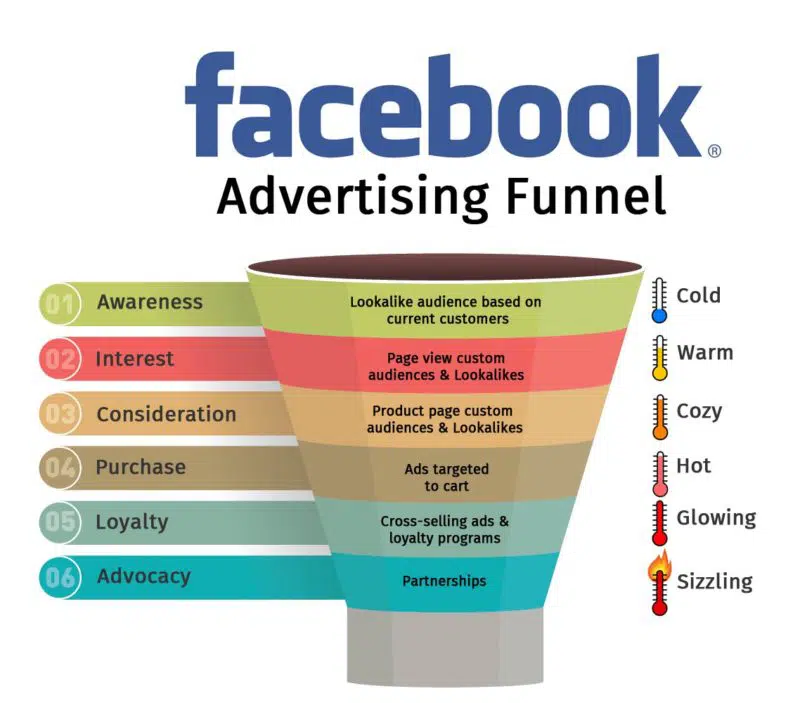
Let's take as a basis the now classic and universally understood customer journey shown in the image.
Google Ads (back then still AdWords) started its operation only with ambitions to be in the 3rd and 4th phases of the customer journey, maybe a little bit in the second as well. Back then, AdWords specialists had full control over campaigns, the Display Network was just developing, YouTube hadn't been bought, advertising formats weren't developed; in short, one couldn't hope for anything more.
However, over the last 5-6 years, Google has changed course, setting ambitions for full coverage of the customer journey, including brand awareness campaigns. That is exactly why the name changed from AdWords to Ads, so that associations that Google advertising is only for keywords would gradually disappear, and that is truly no longer the case.
YouTube video ads, the Display Network (GDN), Remarketing, and the development of the Google Marketing Platform are powerful weapons to justify such ambitions.
If we talk about Facebook, then from the very beginning they have positioned their advertising opportunities as tools for brand, interest generation, engagement/sales, and also loyalty. Remember that Facebook also owns Instagram and Whatsapp, two more very significant players in the internet ecosystem. In a way, Facebook also forced Google to change with this, and now...
Both giants - Google and Facebook are openly fighting to lure advertising budgets away from so-called traditional media and advertising solutions, or at least forcing the use of their technologies.
Where is the problem?
Local media do not receive as much money as they would like. Large funds are invested in editorial content, which is assumed to be much higher quality and more trustworthy than simply interesting content on various websites without a serious content planning structure.
In the interests of us as Latvian residents, entrepreneurs, and representatives of the advertising industry, it would, of course, be better to direct this marketing money to local strivers as much as possible, to leave it in Latvia rather than feeding the big foreign giants.
However, as shown in the above, if an entrepreneur cares about the result and cares about the return on every spent euro, then it is simply impossible to do without the big giants, because in terms of audience size, data, and advertising formats, and therefore in terms of advertising effectiveness, Google and Facebook are at least several steps ahead.
How to solve it? The only logical decision at the moment would be to make the big giants pay taxes locally for locally spent budgets. Let's say, pay taxes to Latvia for Latvian advertising revenue. Movement has already started here; the question is how realistic it is to achieve something like that, whether there will be enough lobby power. In any case, Europe has already sensed this opportunity.
It is not exactly the case that all the money goes to the big giants - agency commissions, which are also not small in total and are constantly growing, remain in Latvia, with Latvian agencies - both media and so-called performance agencies.
And here one cannot go to extremes - then it turns out that one must use Draugiem.lv instead of Facebook/Instagram and everyone must only buy Just5 phones.
Can one do without local media?
In principle, it is now understandable that local media cover the initial stage of the customer journey more - they help create and distribute brand stories and focus on brand promotion campaigns.
Although there is a lack of such super-precise studies (at least I haven't seen any), in our own experience, we have measured that strong campaigns in local media create greater trust and even significantly influence awareness and interest, after which there are much better results in Google and/or Facebook campaigns. Then the question is, when adding everything up - expenses for all campaigns and benefits, does the company come out ahead or has it simply created a lot of noise?
Many companies can simply afford to create a lot of media noise and then write it off as "we created associations for potential customers."
In our experience, there were/are several large companies that successfully work only with Google ads on keywords and do it successfully. Their brand has developed over time by providing a quality service, and all they do in internet advertising is invest n-thousands in Google ads. These companies have a very strong Unique Selling Proposition (USP). Their industry leaders do all the dirty work, create the need, build the story, but they sit at the most advantageous moment of the customer journey, when the customer is looking for an alternative, and collect the customer with that - lower price, better service, etc.
But still, the marketing mix is still a force; local media content still creates higher trust (although I teach my children not to read news portals where negativity dominates).
Digital marketing agencies (performance) often take on too much; there must be a balance, creativity must exist, creative solutions must exist, and one cannot do without a story. Just as one cannot do without local media that can package it beautifully. Everything and everyone must work together.
Frequently Asked Questions about marketing channel effectiveness
Which channel in Latvia provides the fastest return for a small and medium-sized enterprise?
The fastest and most predictable return is provided by Google Search Ads, as they address people who are already looking for a specific service or product. This means a higher conversion rate from the very first days.
Are local news portals still an effective advertising channel?
Local media are valuable for building brand awareness and trust for large companies. However, in terms of direct sales and measurable ROI, Google and Meta digital campaigns are significantly more cost-effective.
How to determine the right budget proportion between Google and Meta ads?
For service industries, we recommend first covering 100% of the search demand in Google Search, and directing the remaining 20-30% of the budget to Meta remarketing and target audience expansion.
Want to know which advertising channels will bring the highest return in your industry?
Request a 15-minute strategy call or use our interactive calculator to calculate your project's budget estimate.
Fixed budget. No hidden extra costs or forced services.