
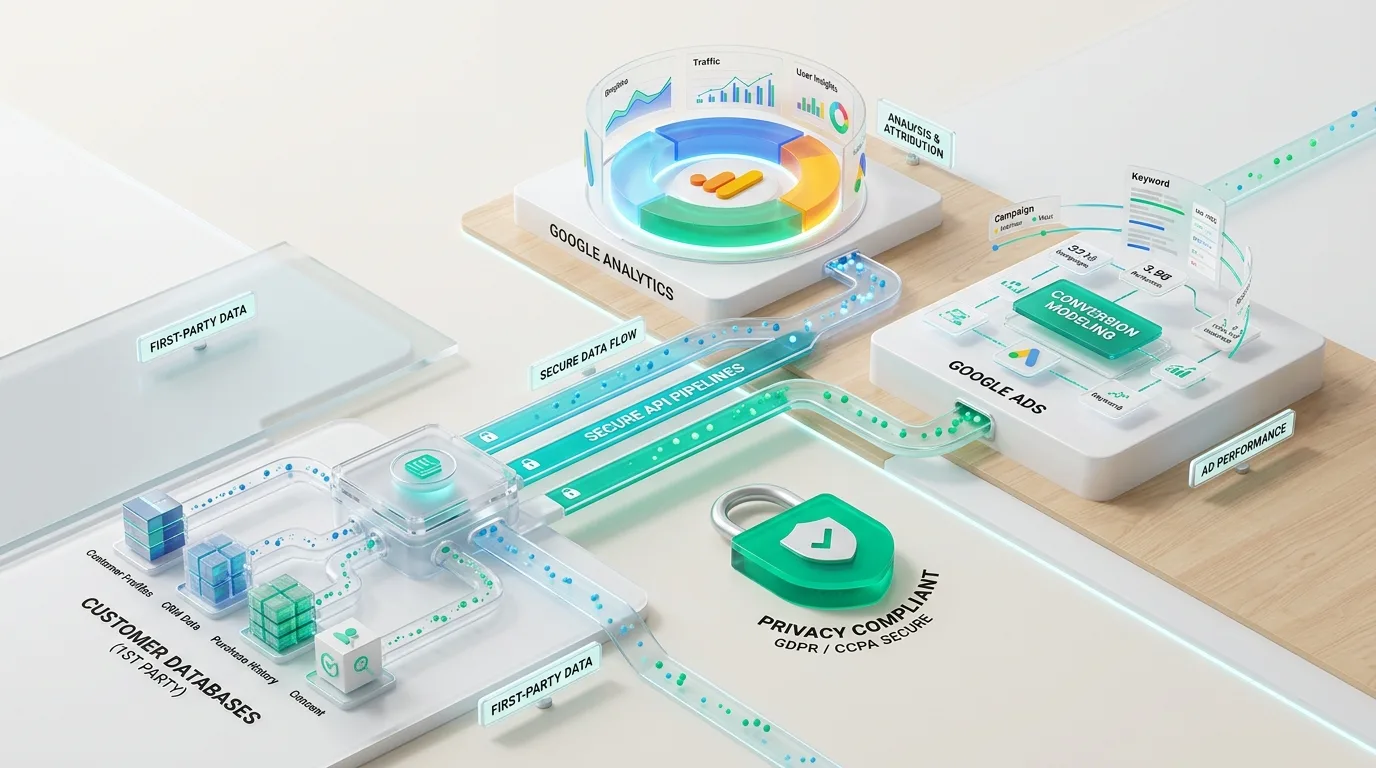
Historical analysis from May 2021 regarding the transition to first-party data. Today, successful advertising without third-party cookies is possible only with properly configured Server-Side analytics and CRM data integration. Learn more about our analytics and process automation services.
Key Takeaways
- End of an Era: Third-party cookies are gradually losing relevance, accelerated by browser restrictions (ITP) and stricter data privacy regulations.
- The Golden Value of First-Party Data: Direct connections with customers - email addresses, registration data, and purchase history - become the most stable foundation for marketing.
- Conversion Modeling: Modern analytics no longer relies on 100 percent literal tracking, but rather on machine learning algorithms that calculate unobserved conversions.
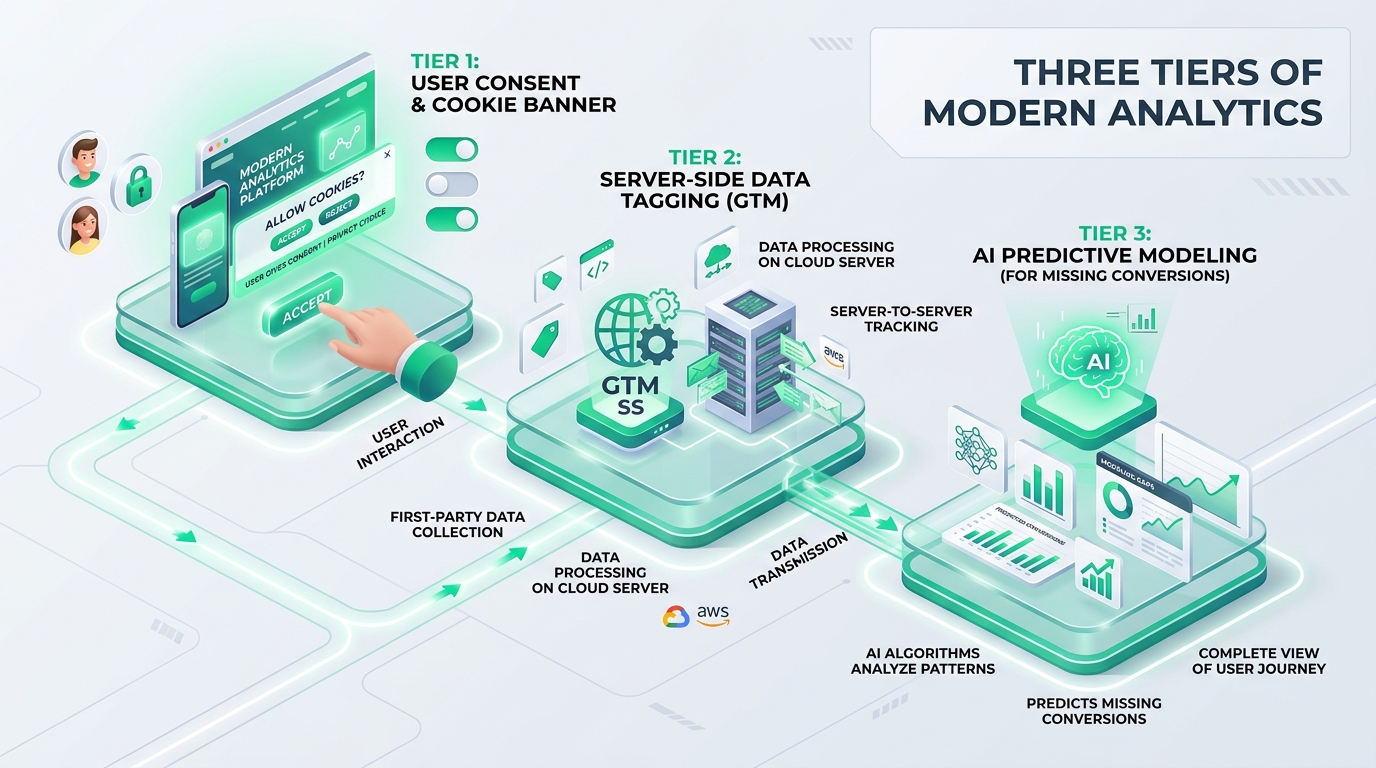
- Server-Side Infrastructure: Server-Side GTM allows companies to filter and route their own data, ensuring complete compliance and faster page load speeds.
In May 2021, the digital marketing landscape continues its rapid transformation. Following Apple's iOS 14.5 privacy update and intelligent tracking prevention (ITP) mechanisms introduced by browsers, it has become clear: the era of third-party cookies is drawing to a close. Companies that have relied exclusively on external ad pixels and simple browser code loading are facing severe data fragmentation.
How can you make informed business decisions in this new reality when a portion of purchases and leads no longer show up directly in reports? The answer lies in two pillars: First-Party Data and AI-driven conversion modeling.
What is First-Party Data and Why Is It the Safest Asset?
To better understand these changes, let us distinguish between the types of data modern marketing works with:
- First-Party Data: Information that customers voluntarily provide directly to you on your website - shopping carts, registered profiles, newsletter subscriptions, or completed application forms. This data belongs to you, is legally clean, and remains unaffected by browser cookie blockers.
- Third-Party Data: Information gathered by external networks (such as ad exchanges or data brokers) regarding user browsing activity across hundreds of different sites. Privacy advocates are currently actively restricting this exact type of data.
How Does Conversion Modeling Work?
Many marketers still believe that analytics should function like accounting - if the system did not see a direct click with a cookie, the conversion does not exist. In reality, however, a person might see an ad on their phone during a lunch break, but complete the order in the evening from a home computer without a direct link.
Conversion modeling in Google Ads and Google Analytics 4 (GA4) uses sophisticated statistical models:
- Similar User Behavior Analysis: The system takes data from users who gave full consent to cookies and studies correlations between impressions, campaign channels, devices, and purchases.
- Filling Data Gaps: When another user with identical parameters opts out of cookies, the model calculates the probability that their purchase is linked to the specific ad and proportionally assigns conversion weight to the relevant campaign.
- Aggregated Results: Reports provide a more complete picture, allowing you to properly evaluate campaign profitability (ROAS) without violating individual privacy.
Google Analytics Deep Dive: The Future of Data and GA4
To understand how Google's architecture is shifting toward event-based measurement and machine learning, watch this official product presentation by Google analytics engineers:
Comparison: Traditional Versus Modern Analytics Models
Here is how old-school approaches differ from modern data infrastructure:
| Aspect | Traditional Approach (2018 - 2020) | Modern Approach (2021+) | Business Benefit |
|---|---|---|---|
| Data Source | Third-party cookies in the browser | First-party data and direct consent | Complete independence from browser blockers and regulations. |
| Tag Management | Client-side JavaScript scripts on the page | Server-Side Google Tag Manager (sGTM) | Website speed increases because clients do not load redundant scripts. |
| Conversion Tracking | Direct 1:1 attribution data only | Modeled conversions and enhanced attribution | Algorithms receive sufficient signals for bidding. |
| Consent Control | Simple notification banner without blocking | Dynamic Google Consent Mode | Legal security and compliant data processing without risks. |
Practical Steps to Prepare Your Business
To ensure uninterrupted ad optimization and accurate reporting, we recommend taking three strategic actions in 2021:
- Implement Google Consent Mode: Configure your cookie consent tool so that Google Ads and GA4 receive cookieless pings in case of rejection. This allows the system to use conversion modeling and recover up to 70 percent of lost ad signals.
- Strengthen Direct Customer Acquisition: Ensure that your web development encourages user registration and contact capture. A customer email database is your strongest weapon for personalized communication.
- Connect Google Ads with First-Party Data: Professional Google Ads management today includes Customer Match lists and Enhanced Conversions setup, which significantly increases campaign returns.
- Perform Comprehensive Data Cleanup: Order an independent analytics audit to uncover data loss points and fix errors in your conversion funnel.
Frequently Asked Questions (FAQ)
Do I absolutely need to transition to Server-Side GTM?
For larger e-commerce stores and businesses with substantial advertising budgets, this is one of the best investments. Server-Side GTM ensures third-party codes do not execute on user devices, thereby improving page load speeds (Core Web Vitals) and protecting data from browser filtering blocks.
How does Google Consent Mode affect my campaign budget?
Without Consent Mode, campaigns lose a large portion of conversion data. This means smart bidding algorithms assume campaigns are underperforming, starting to reduce delivery or misallocate funds. Consent Mode restores necessary data flows, making budget utilization much more accurate and profitable.
Is first-party data safe from a GDPR perspective?
Yes, because first-party data collection happens through direct communication with customers based on clear privacy policies and active user actions (such as checkout). Additionally, tools like Enhanced Conversions hash personal information using a one-way SHA-256 hashing algorithm before sending data.
When will Universal Analytics be completely replaced by GA4?
Google has planned a gradual transition, but GA4 has already become the default property for new sites. We recommend installing GA4 alongside existing Universal Analytics in 2021 to start accumulating historical data and master the event-based measurement model.
Ready to organize your company's first-party data and marketing measurements?
Schedule a 15-minute consultation. We will evaluate your analytics architecture and eliminate data losses in your ad accounts.
Fixed budget. No hidden fees or forced services.