
In 2026, automated pricing algorithms and AI agents demand even more precise human oversight and value-based data from real CRM revenues. Learn more in our Google Ads Campaign Audit.
At the start of the spring sales season, online stores face fierce competition in search results. Most e-commerce sites lose buyers not due to a lack of products, but because their category pages are empty or faceted filters create thousands of indexing duplicates. This article examines proper category hierarchy, filter indexing, and methods to attract high-converting organic traffic.
Why Category Pages Are the Main Revenue Source for E-commerce SEO
Users searching for general product terms (e.g., ‘ergonomic office chairs’ or ‘stainless steel kitchen sinks’) typically haven't chosen a specific model yet. They are looking for options and comparison opportunities. If such search queries lead to individual product pages, bounce rates increase rapidly because the buyer wants to see the entire range in one place.
Therefore, professional online store SEO optimization focuses on strong category pillars. Each category requires a clear H1 heading, an introductory factual text with selection criteria, and logical product filtering.
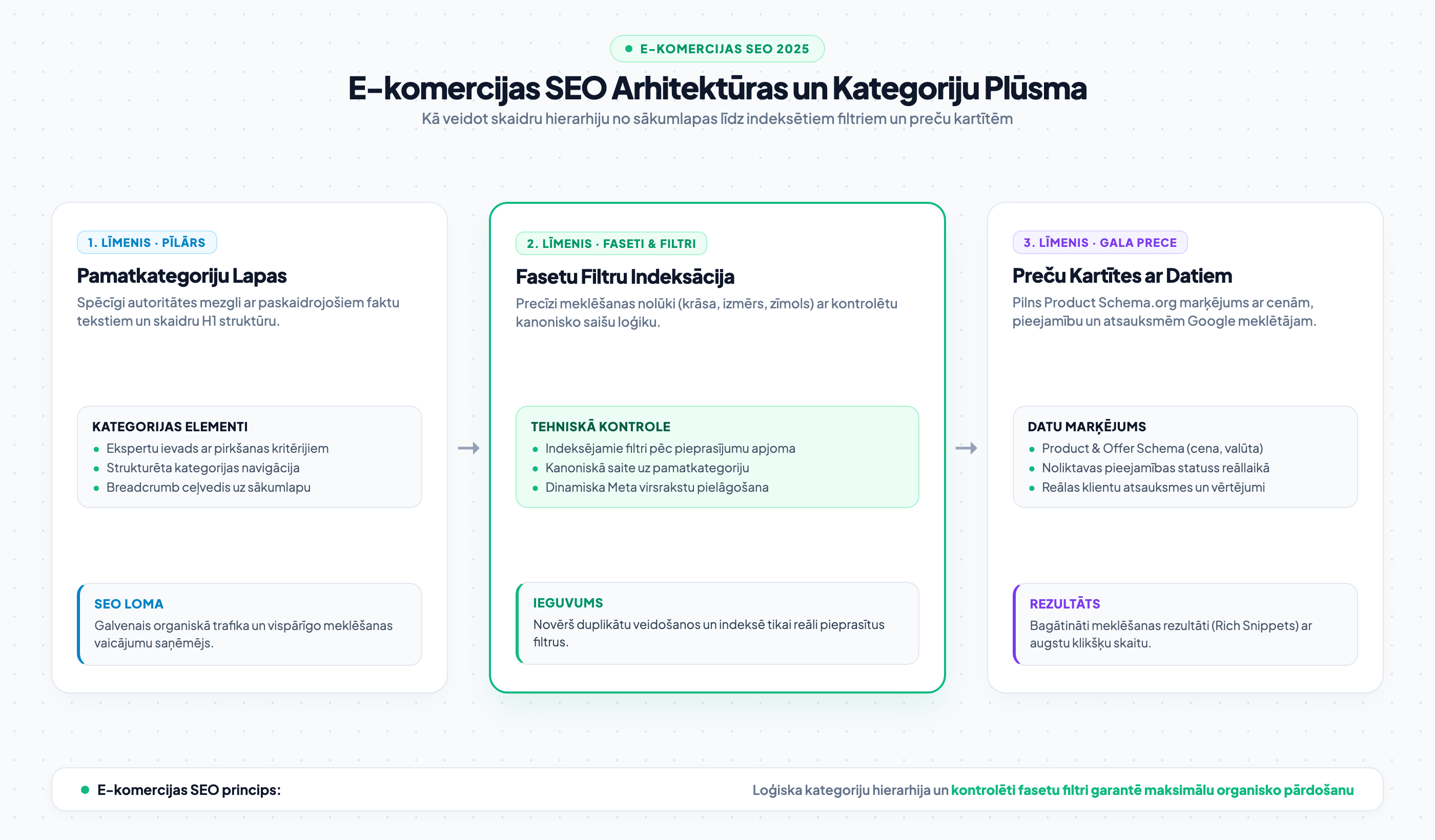
Faceted Navigation and Canonical Link Management
A filter system is an excellent tool for buyers, but it can become a real disaster for search engine robots. If every combination of color, size, or price creates a new URL without canonical directives, the search engine wastes its Crawl Budget indexing thousands of useless duplicates.
As part of e-commerce platform modernization, controlled filter indexing must be established. The most popular combinations with real search demand are turned into static, indexable subcategories with unique meta data, while all other dynamic filters receive a canonical link to the main category or a noindex tag.

“The biggest e-commerce mistake is having hundreds of product pages without explanatory category texts or with blocked filters. The search engine wants to see a clear structure that precisely resolves the buyer's search intent.”
Product Page Schema.org Markup and Rich Snippets
As we detailed in our analysis on how to fix e-commerce SEO errors, a buyer's decision in search results is determined by price, availability, and reviews. By implementing correct Product and Offer structured data, Google displays star ratings, stock status, and price ranges in organic results.
This not only increases the click-through rate (CTR) but also filters out visitors for whom the product price is unacceptable, thereby improving the site's overall conversion rate.
- Category Descriptions: Check if your most important categories have explanatory introductory text with buying criteria.
- Canonical Links: Ensure that product filter pages have correctly set canonical tags pointing to the main page.
- Price Schema: Use a Schema Validator tool to check if price and availability data are correctly passed on product pages.
Frequently Asked Questions about E-commerce SEO
How long should product category descriptions be?
A concise 120-180 word introduction at the top of the page, explaining the category's essence and distinctions, is sufficient. Additionally, a detailed FAQ block at the bottom of the page can serve buyers who want to learn more about selection criteria.
Should all filter pages be indexed?
No. Only filter pages with proven search demand should be indexed (e.g., ‘black leather shoes size 42’). Rare and technical filter combinations should be protected with a noindex tag or a canonical link.
What to do with products that are no longer in stock?
If the product will return, keep the page active with a 'Temporarily out of stock' notice and offer similar alternatives. If the product is permanently removed from the assortment, use a 301 redirect to the relevant main category.
Conclusions and Next Steps
Order in e-commerce structure is the key to success. By organizing category pages and mitigating duplicate content risks, an online store gains a stable and predictable influx of organic buyers throughout the sales season.
Want to ensure your Google Ads budget isn't wasted on empty clicks?
Request a 15-minute independent campaign audit. We'll review your account architecture and uncover up to 30% savings potential.
Fixed budget. No hidden fees or forced services.