
In 2026, the search landscape has changed irreversibly: content is valued based on direct citability in ChatGPT, Perplexity, and Gemini search engines. Learn more about our SEO and GEO services.
Generative Engine Optimization (GEO) is becoming as vital a discipline as traditional SEO in 2025. Buyers and business partners increasingly ask comparative questions to AI assistants - ChatGPT, Perplexity, and Google AI Overviews. In this article, we explore how to structure site facts, entities, and authority so your company is cited as a recommended market leader.
How AI Assistants Select Information and Recommend Brands
Unlike traditional search engines that offer a list of ten blue links, large language models aim to provide an immediate, synthesized answer to the user's query. When a potential client asks for the most reliable suppliers or a comparison of solutions, the model looks for semantic entities, real-world data consistency, and authority signals across multiple independent sources, rather than keyword density.
To ensure a brand is included in these summaries, a strategic search optimization and GEO approach is required. Content structure must be designed so that artificial intelligence can clearly interpret your service specifics, pricing parameters, geographic coverage, and technological advantages.
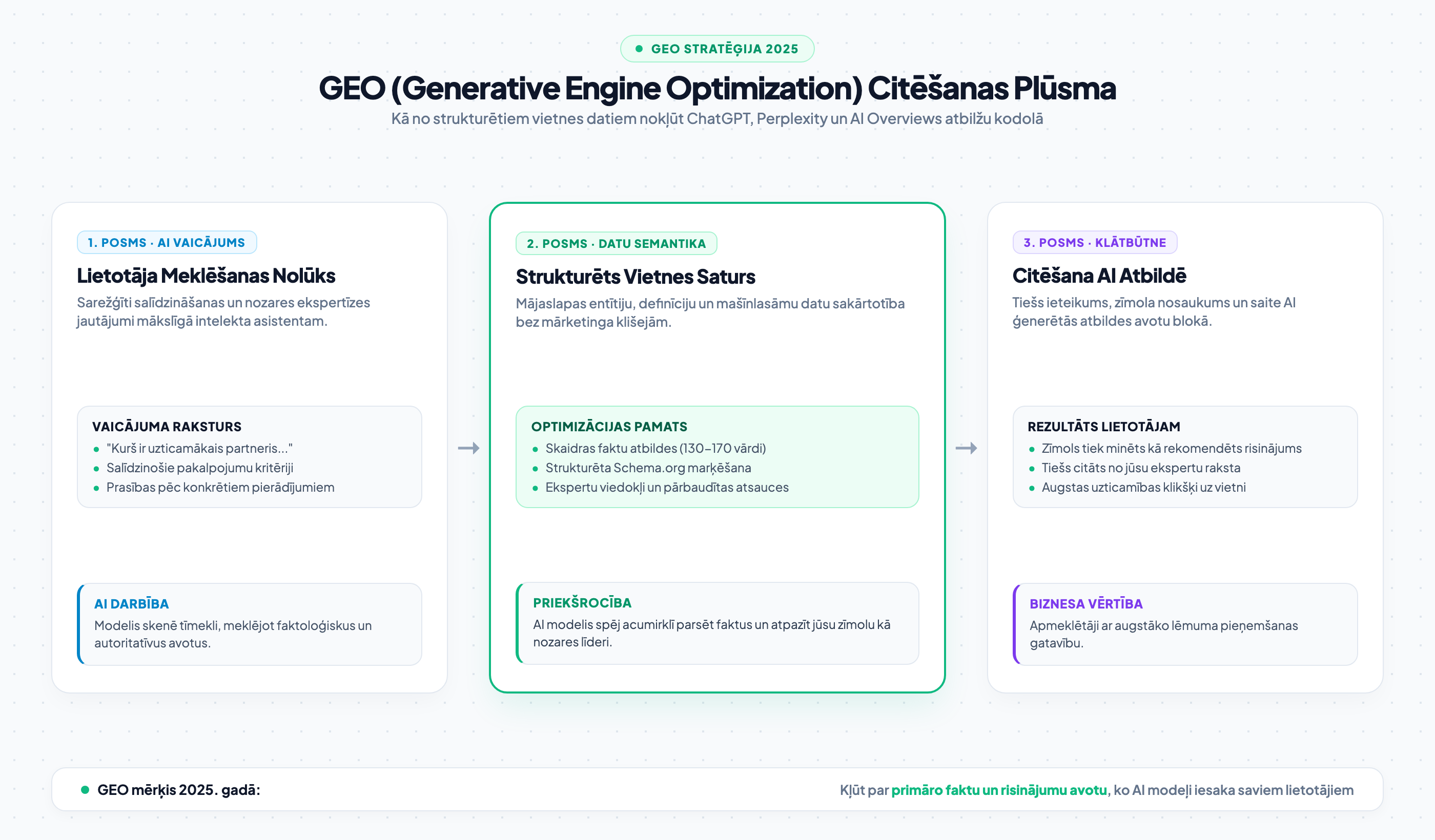
Fact Blocks vs. Empty Marketing Cliches
The biggest obstacle preventing many websites from being visible to AI models is generic, emotional text lacking concrete facts. Phrases about a 'dynamic team' or 'individual approach' provide no value to an AI algorithm. Models look for clear definitions, process steps, technical specifications, and answers to specific questions in concise fragments of 130 to 170 words.
When creating structured content and entities, it is essential to use machine-readable Schema.org markup (Article, FAQPage, Organization, Service). This helps AI bots accurately link your brand to the relevant industry and region without ambiguity.

“If a website is full of marketing cliches and empty phrases, large language model bots simply ignore it. AI looks for concrete facts, precise definitions, and answers. The core of GEO is becoming the most accurate source in machine logic.”
How to Prepare Your Website for the AI Search Revolution
As observed in our previous study on how the AI search transformation changed user behavior, brands that openly publish their expertise win. Add detailed FAQ blocks, real workflow stages, and comparison tables with alternatives to your service descriptions.
When a search model performs data synthesis, these organized comparisons become the primary source for generating answers, providing your company with high credibility even before the first contact with the customer.
- Fact Definitions: Check if your service pages clearly define exactly what is offered and what the result is.
- FAQ Blocks: Ensure the page includes frequently asked questions with direct and specific answers.
- Entity Data: Use the Google Rich Results tool to check if the site has correct Organization and Service Schema markup.
Frequently Asked Questions about GEO and AI Search
How does GEO differ from regular SEO?
SEO focuses on ranking in traditional search results for specific keywords, while GEO aims to ensure AI assistants (ChatGPT, Perplexity, Copilot) cite and recommend your company as a trusted solution in their answers.
How quickly can results from GEO optimization be seen?
Models using real-time web search (Perplexity and ChatGPT Search) respond to high-quality content changes within a few days to weeks after new, structured content is indexed.
Will regular Google traffic decrease due to AI search?
Click-through rates for general queries may decrease, but visitors coming through AI recommendations are significantly better informed and have a much higher purchase readiness.
Conclusions and Next Steps
The search environment is changing rapidly, and companies that adapt their content strategy to the requirements of new assistants early will win. By moving from superficial content to deep, fact- and entity-driven communication, you ensure your brand's presence where tomorrow's buyers will make their decisions.
Want to strengthen your brand authority in Google and new AI search engines?
Book a 15-minute strategic call. We will perform an SEO and GEO diagnostic of your site, preparing content for AI answer indexes.
Fixed budget. No hidden extra fees or forced services.