
In 2026, Meta algorithms rely exclusively on first-party CAPI signals and high-impact creative assets, moving away from narrow audience targeting. Learn more in our Meta Ads Campaign Management section.
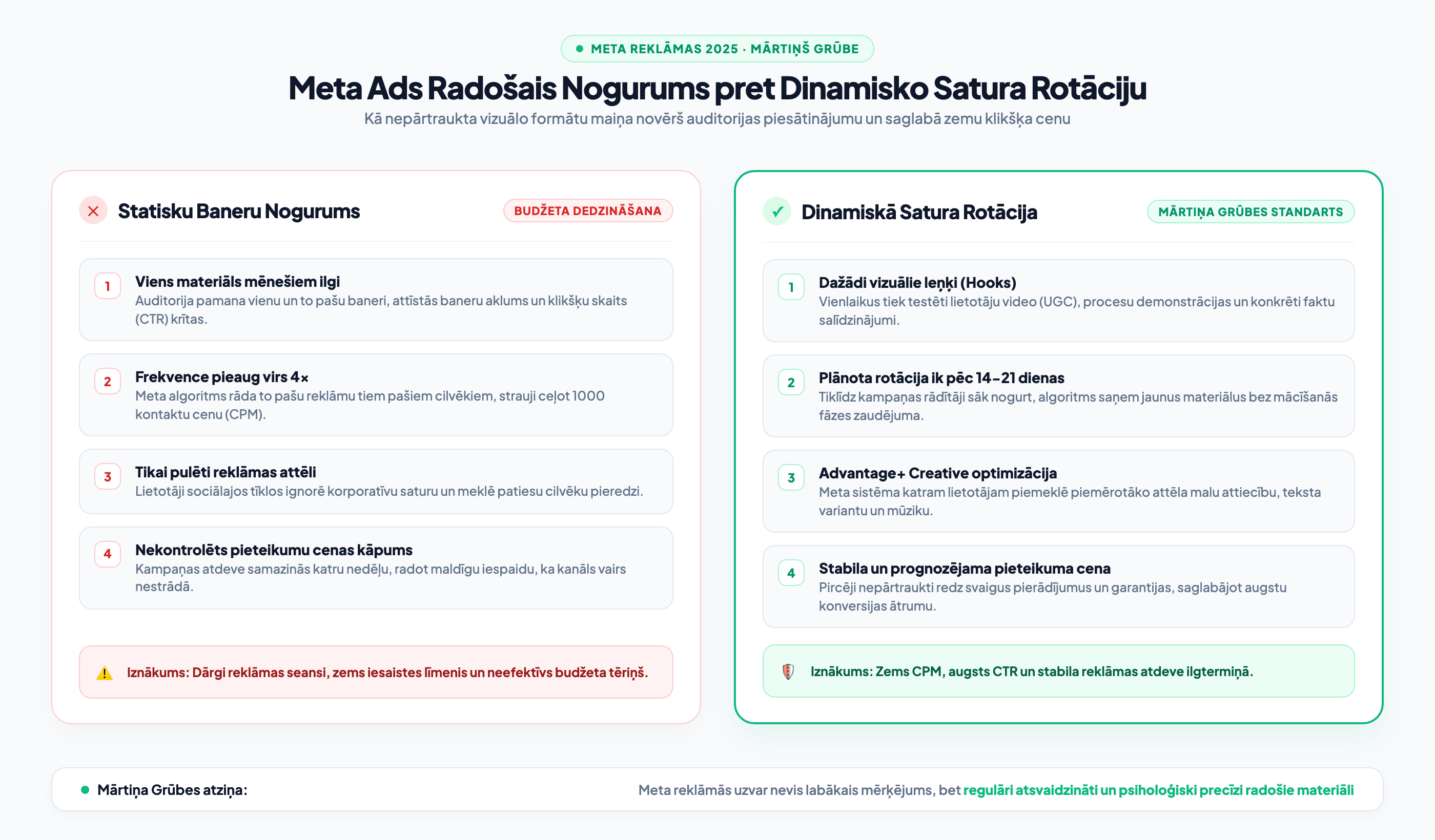
The Meta advertising platform, powered by Advantage+ campaigns, has become incredibly intelligent at finding audiences, but it has created a new challenge: accelerated creative fatigue. When an ad is shown too frequently, the cost per 1,000 impressions (CPM) spikes while click-through rates plummet. In this article, we explore a systematic approach to testing visual formats and preventing audience saturation in 2025.
Why technical targeting no longer dictates Meta Ads success
In the past, marketers spent hours building complex combinations of interests and demographics. Today, Meta's artificial intelligence finds the best buyers on its own, based on how users respond to specific visual messaging. This means that your creative asset is now your primary targeting tool.
In the Meta advertising campaigns we manage, we replace static banners with dynamic visual variations that precisely address different buyer segments and remove doubt the moment a user scrolls through their feed.
Three key visual angles every business must test
To maintain high efficiency, every campaign should run at least three distinct content approaches simultaneously:
- Pain Point Contrast: A short video or visual showing a typical market problem versus your streamlined solution.
- Authentic Experience (UGC / Behind-the-scenes): Real work processes, screen recordings, or customer video testimonials without artificial studio polish.
- Fact and Guarantee Card: Clear figures, timelines (e.g., 96-hour development), and fixed budgets with micro-reassurance.
As a synergy with Google Ads search campaigns, social media ads build brand awareness, which leads to an increase in Google search volume with significantly higher conversion rates.

"The biggest mistake in Meta Ads is hoping one good banner will work for half a year. The algorithm quickly 'eats' the warm audience, frequency rises, and the cost per lead doubles. For campaigns to be profitable in the long term, you need regular rotation of visual angles and formats every two to three weeks."
Rotation cycle: when and how to swap materials
As explained in our guide on server-side data flows and analytics, as soon as the frequency over the last 7 days exceeds 2.5 to 3.0 and the cost per click starts to rise, it is time to introduce new materials. It is important not to delete the old campaign, but to add new materials to the existing structure to preserve the learning accumulated by the algorithm.
- Frequency Audit: Check the Frequency metric in Ads Manager - if it exceeds 3x, the campaign urgently needs new materials.
- Format Ratio: Ensure the campaign includes both 1:1 and 9:16 vertical Stories/Reels sizes.
- First-Second Hook: Check the first 3 seconds of your video - does it immediately show a clear solution without slow intros?
Frequently Asked Questions about Meta campaign optimization
How often should I add new ad materials?
The optimal rhythm is every 2 to 3 weeks. You don't need to rebuild the entire campaign: it is enough to change the first frame (Hook) or the wording of your offer.
Why do cheap phone-format videos often outperform expensive studio clips?
Social media users are accustomed to natural content from friends. A glossy TV-style ad instantly signals a sales attempt, whereas an authentic vertical video builds trust and holds attention.
How do I evaluate which material actually drives sales?
By using Meta Conversions API (CAPI) and UTM parameters in conjunction with your CRM system, you can see the real contribution of each individual visual asset to closed deals.
Looking for a way to stabilize your Meta Ads CPA and overcome creative fatigue?
Book a 15-minute consultation. We will evaluate your campaign structure, server data flow, and develop a high-return advertising matrix.
Fixed budget. No hidden fees or forced services.