In 2026, automated bidding algorithms and AI agents require even more precise human oversight and value-based data from real CRM revenue. Learn more in our Google Ads campaign audit.
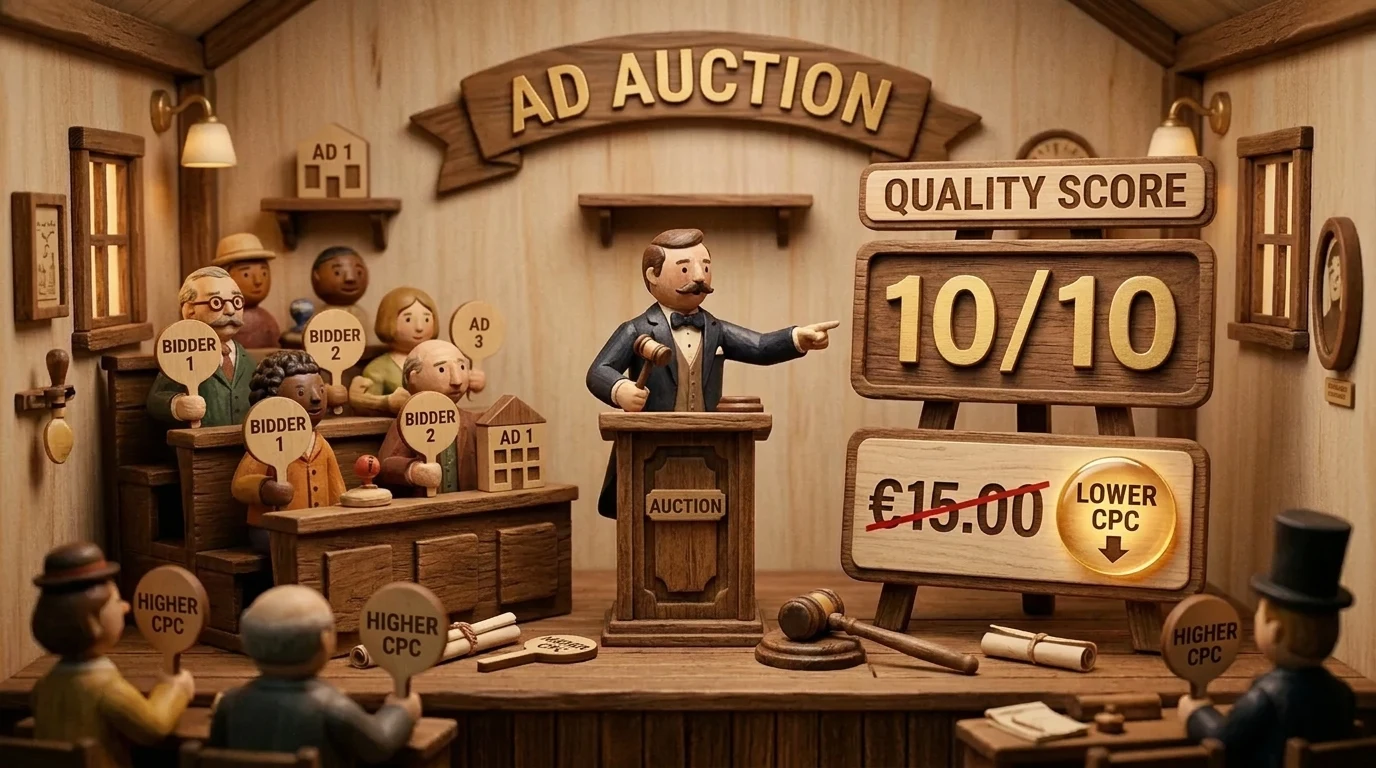
The Google Ads auction does not work like a standard auction where only the highest bid wins. Google uses the Ad Rank formula, where Quality Score plays an equal role. Companies with excellent ad relevance and fast websites pay significantly less per click than competitors with large but inefficient budgets. In this article, we explore auction math and practical steps to raise your Quality Score to the 9-10 level.
Ad Rank Formula and the Impact of Quality Score on CPC
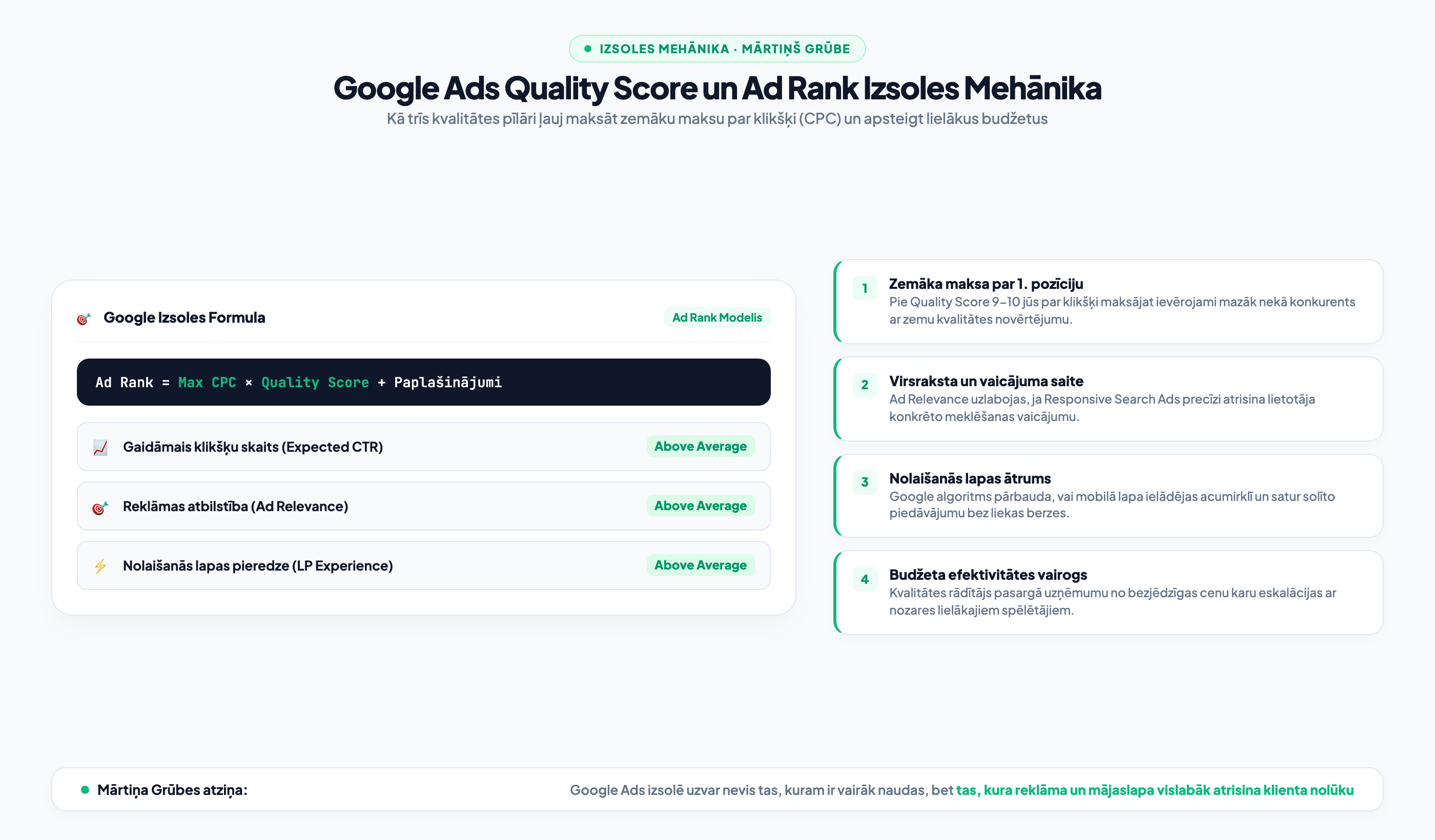
Every ad appearance in search results is the outcome of a real-time auction. Google calculates Ad Rank for each participant by multiplying the maximum bid (Max CPC) by the Quality Score and adding the impact of ad extensions. The actual cost per click is calculated by dividing the Ad Rank of the competitor below you by your Quality Score.
As we practice in our Google Ads management, targeted work on Quality Score components allows for reduced costs per click while increasing overall campaign return and profit.
The Three Pillars of Quality Score and How to Optimize Them
A Quality Score from 1 to 10 is composed of three clearly defined parts:
- Expected CTR: Google's historical assessment of the likelihood that a user will click on your ad. This is improved with strong headlines and specific guarantees.
- Ad Relevance: How accurately the ad text matches the intent of the search query. This is achieved by grouping keywords into tight thematic groups.
- Landing Page Experience: How fast, convenient, and relevant the website is after the click. Mobile load time should be under 1.5 seconds.
In turn, combined with content and SEO optimization principles, a well-structured page helps achieve success in both organic search and paid ad auctions.

“Most advertisers think the 1st position in the Google auction is bought with more money. In reality, Google's priority is user experience. With a high Quality Score (8-10), you pay 30-50% less for the top spot than a competitor who simply tries to solve everything with a high bid.”
How Website Speed Affects Ad Profitability
As we explained in our analysis of Google Ads strategies and budget control, if the landing page is slow and the visitor closes it before the content loads, Google's algorithm immediately reduces the Landing Page Experience score. As a result, the cost per click automatically increases in the next auction.
- Quality Score columns: Add three status columns to your Google Ads keyword report (Expected CTR, Ad Relevance, LP Experience).
- Low score filter: Find keywords with scores below 6/10 and check which component is dragging them down.
- Headline synchronization: Ensure the keyword appears precisely in both the ad's Headline 1 and the landing page's H1 heading.
Frequently Asked Questions about Quality Score
What is the optimal Quality Score?
A score of 7/10 is the industry baseline. Scores of 8, 9, and 10 provide real price discounts in auctions, while scores below 5/10 mean you are significantly overpaying for every visitor.
How fast does Quality Score change after page improvements?
The algorithm updates data gradually, usually after accumulating at least 50 to 100 new search queries and clicks. Significant changes are typically visible within 1 to 2 weeks.
Is Quality Score always 10/10 for brand campaigns?
Usually yes, because Expected CTR and relevance are maximized for brand searches. However, if the landing page is technically slow or content is broken, even brand keyword scores can drop.
Want to ensure your Google Ads budget isn't being wasted on empty clicks?
Apply for a 15-minute independent campaign audit. We will check your account architecture and uncover up to 30% savings potential.
Fixed budget. No hidden fees or forced services.