
In 2026, the search landscape has changed irreversibly: content is evaluated based on direct citation viability in ChatGPT, Perplexity, and Gemini search engines. Learn more in our SEO and GEO services.
In the spring of 2025, Google search algorithms continue to reinforce demands for authentic content authority (E-E-A-T - Experience, Expertise, Authoritativeness, Trustworthiness). Mass-generated, synthetic content lacking human-verified experience is losing ground to industry practitioners. In this article, we explain which authority signals are critical for every company website.
Why Generic Texts Can No Longer Sustain Search Rankings
Ever since artificial intelligence tools enabled the generation of hundreds of articles with the click of a button, the internet environment has been flooded with uniform content. The response from search engines is logical - algorithms learned to recognize text patterns lacking real experience depth. If an article lacks specific figures, situational descriptions, or verifiable facts, search engines perceive it as low-value information.
To achieve long-term success, it is necessary to perform targeted SEO audits and authority building. This means creating content from a practitioner perspective, revealing real industry challenges, and providing solutions that cannot be found in theoretical textbooks.
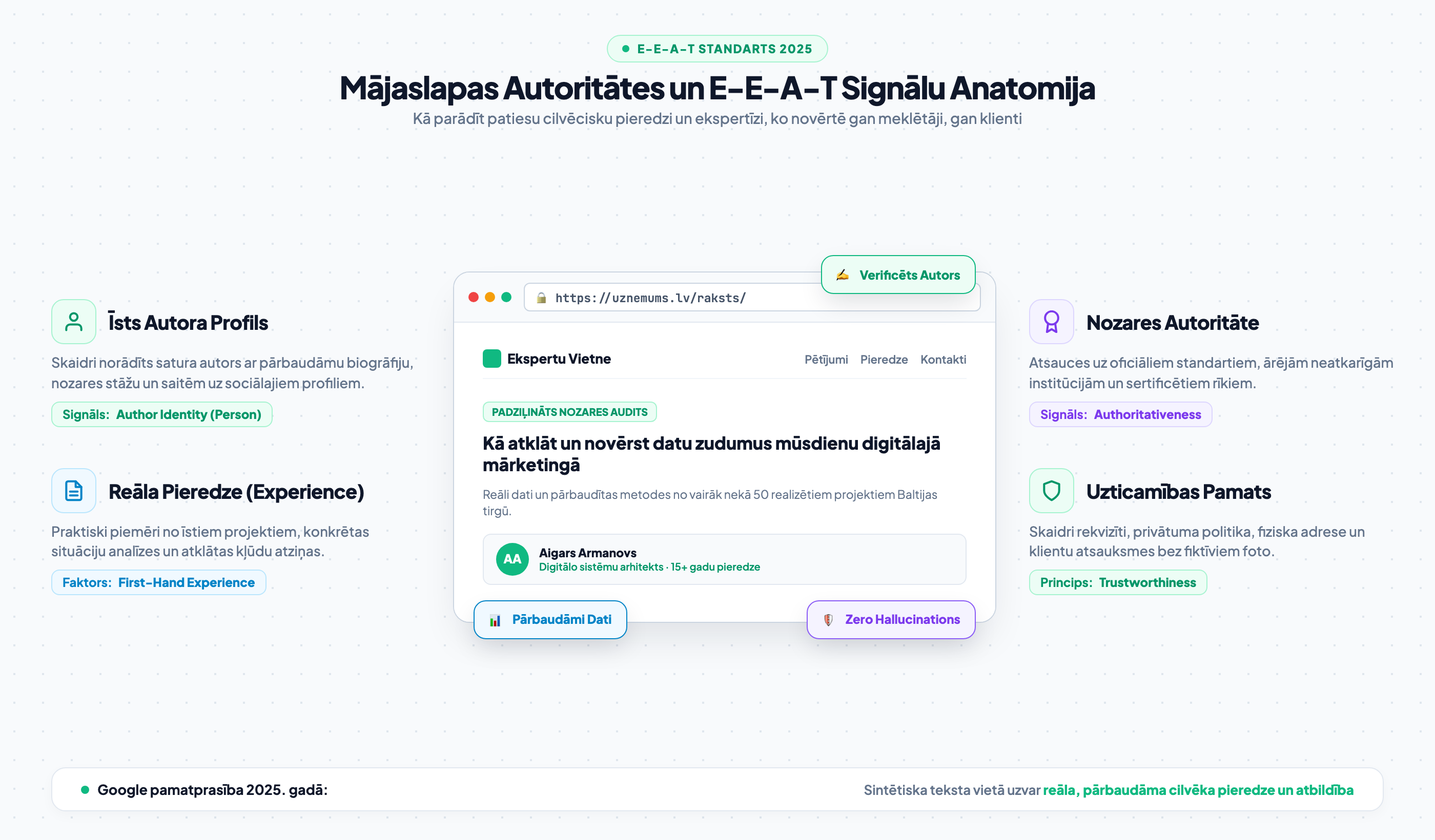
Author Identity and Verifiable Industry Experience
One of the most important E-E-A-T requirements is clear accountability for published information. Every significant article or study must be tied to a real author with a verifiable biography, industry experience, and links to social profiles (such as LinkedIn). Anonymous content from an 'editorial board' or fictitious profiles rapidly loses credibility in the eyes of search engines.
As part of content structure organization, it is essential to supplement articles with structured data (Schema.org Person and Author markup). This helps Google and AI models connect a specific expert opinion with the brand's overall authority.

“Google is becoming increasingly demanding regarding synthetic texts written solely for search engines. In 2025, the winners are those who are not afraid to show their name, real practice, and an honest opinion on industry challenges.”
How to Create Content That Withstands Algorithm Updates
As we analyzed in our study on E-E-A-T signal audits, the safest defense against any algorithm fluctuations is generating true value for the reader. Include original research, survey data, technical diagrams, and honest comparisons in your content.
Make sure your website clearly displays company registration details, physical address, privacy policy, and real customer reviews. These simple yet fundamental signals build the foundation of trust for both visitors and search systems.
- Author Bylines: Check whether blog articles clearly indicate a real author with a title and experience description.
- Evidence Base: Make sure claims in texts are supported by real facts rather than generic phrases.
- Trust Data: Verify that full company registration details and certificates are easily found in the footer and contact page.
Frequently Asked Questions About Authority Signals
How does Google verify whether an author is a real person?
Algorithms analyze Knowledge Graph entities, the author's presence in other reliable industry resources, professional profiles, and references from independent sources across the web.
Can AI-generated content be used if it is reviewed by an expert?
Yes. Google guidelines state that the quality and accuracy of the final content are what matter, not the tool used to create it. However, the expert must add real experience and take responsibility for the truthfulness of the information.
How often is it recommended to update existing content?
It is recommended to revise major industry articles at least once a year, updating outdated data and links while adding the latest market insights.
Conclusions and Next Steps
The search ecosystem is evolving toward a direction where artificial intelligence filters out superficial information and prioritizes reliable experts. By strengthening your site authority with genuine evidence and clear accountability, your company secures a stable position among industry leaders.
Want to Strengthen Your Brand Authority in Google and New AI Search Engines?
Book a 15-minute strategic conversation. We will perform an SEO and GEO site diagnostic, preparing your content for artificial intelligence answer indices.
Fixed budget. No hidden extra fees or pushed services.