By 2026, the search landscape has irrevocably changed: content is now valued by its direct quotability in ChatGPT, Perplexity, and Gemini search engines. Learn more about our SEO and GEO services.
The Google I/O 2025 conference marked the most ambitious transformation of the search engine interface in its history. With the global expansion of AI Overviews and Gemini's integration into real-time search queries, the traditional 10 blue links model has irrevocably changed. This article analyzes how the new AI search architecture impacts website organic traffic and how to maintain visibility in leading positions.
How AI Overviews and Real-time Summaries Change Click Flow
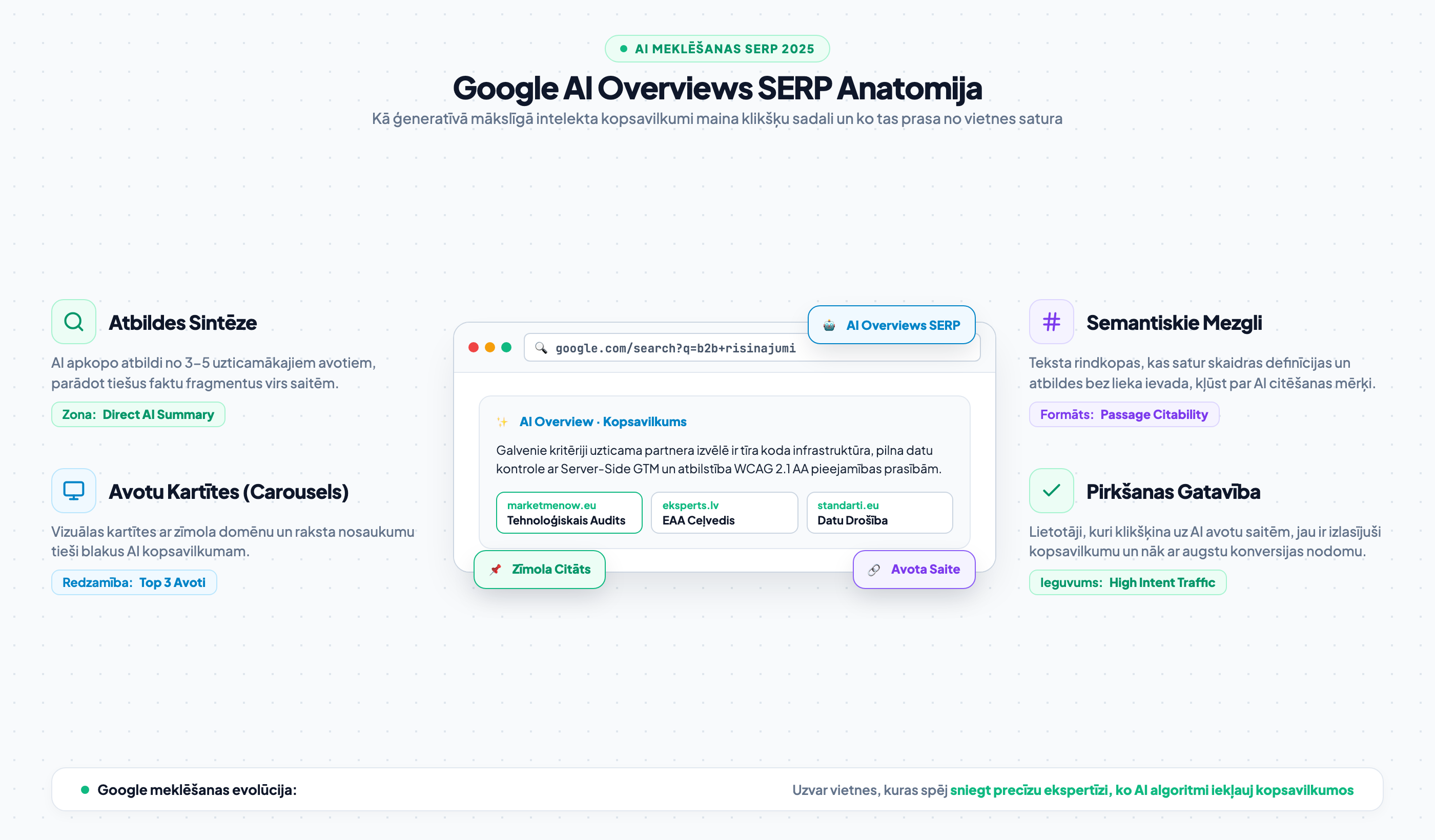
User behavior is becoming conversational. Search engines are no longer just receiving individual keywords, but long, contextual questions. Google's AI assistant immediately compiles an answer at the top of the screen, combining information from multiple sources. This means that low-value content or superficial descriptions no longer receive clicks.
For a brand to become one of the authoritative sources that AI includes in its summaries, a targeted SEO and content optimization strategy is required, based on deep expertise and a clear factual architecture.
Geographic and Local Search in the New AI Model
Local business queries are particularly impacted. The new Gemini model combines real-time Google Maps data with a company's website content and customer reviews, offering personalized recommendations based on location and user preferences.
Therefore, a modern local SEO and local authority audit has become a key prerequisite for a business to appear in AI-generated maps and summaries precisely when a customer is searching for a service in their city or region.

“After Google I/O, the search engine is no longer just a list of blue links, but a conversational partner. If your content isn't structured as a direct, factual answer with clear entities, AI summaries will simply ignore your site.”
How to Adapt Content: From Keywords to Knowledge Entities
As we explained in our study on how artificial intelligence impacts SEO and content creation, algorithms evaluate entity relationships and information density. Content filled with artificially repeated keywords can no longer compete with concise data structured in tables and lists.
In every article, it's crucial to provide an immediate answer in the first paragraphs, utilize Schema.org markup, and ensure clear references to real facts, industry standards, and author expertise.
- Direct Answer: Check if the main answer and benefit on your service pages are readable within the first 40 words.
- FAQ Structure: Ensure that your website's frequently asked questions section is equipped with FAQPage structured data.
- Local Signals: Verify that your Google Business Profile data (opening hours, address, services) 100% matches your website.
Frequently Asked Questions about Google I/O 2025 Changes
Will AI Overviews completely replace organic search?
No. For complex purchasing decisions, B2B services, and comparisons, users will still open in-depth sources. However, what changes is which pages receive clicks: these are sites that AI cites as trusted sources in the summary box.
How do I know if my site already appears in Google AI answers?
This information can be analyzed in Google Search Console reports, as well as by manually testing complex question-form queries, noting references and map blocks.
What changes should be made to existing content first?
Add short, factual summaries at the beginning of each important page, eliminate superfluous introductory phrases, and structure data in tables or numbered lists.
Want to strengthen your brand's authority in Google and new AI search engines?
Request a 15-minute strategic consultation. We'll perform an SEO and GEO diagnostic of your website, preparing your content for artificial intelligence answer indexes.
Fixed budget. No hidden fees or forced services.