
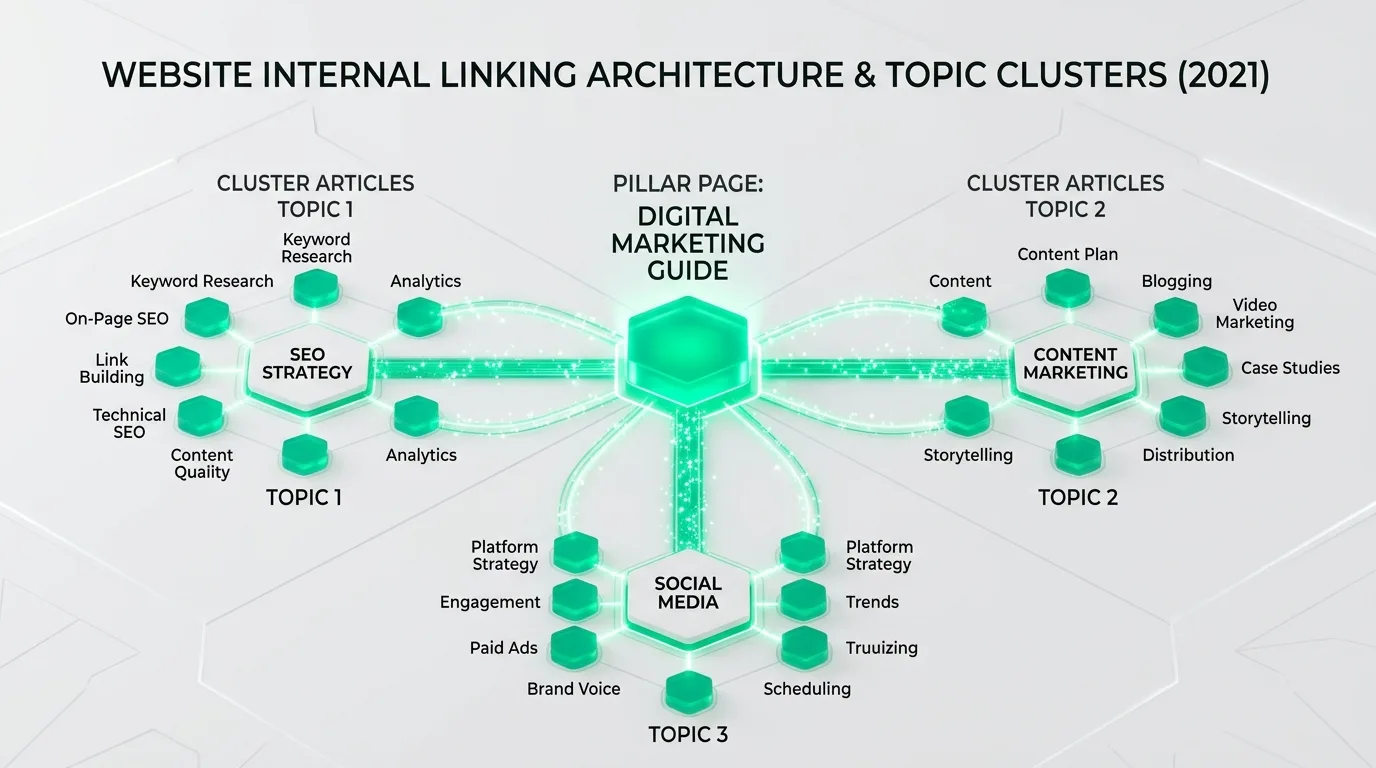
A historical 2021 guide on PageRank distribution and cluster architecture. This exact pillar and cluster model forms the foundation of the 15 service pages on the MarketMeNow website. Learn more about our SEO optimization services or request a website structure audit.
Key Takeaways
- Internal PageRank Power: Internal links are a tool 100% under your control, channeling authority earned from external backlinks to your most commercially important service pages.
- Topic Clusters (Hub & Spoke): By grouping content around a central pillar page and linking it to in-depth sub-articles, your site gains higher topical authority.
- Descriptive Anchor Text: Forget "click here" or "read more" links: your anchor text must clearly tell Google and the user what the target page is about.
- Navigation Depth: No important page should be more than 3 clicks away from your website's homepage.
When companies think about SEO link building, the focus is usually on external links from other portals. However, many overlook a simple truth: the most powerful, cost-effective, and 100% controllable tool is your own internal link network. Without a properly structured internal link architecture, even the most valuable external backlinks remain "trapped" on the homepage or in random blog posts, failing to reach the pages that actually drive sales.
In 2021, the Google search algorithm began placing increasing importance on topical authority and semantic relationships between pages. By implementing a topic cluster model, you clearly show search bots which pages are the foundation of your business and how they complement each other.
What is the Pillar & Cluster model?
In a traditional blog structure, all articles are arranged in chronological order, causing older content to sink to the 15th page of the archive where Googlebot rarely visits. The cluster model organizes content into a hierarchical and logical system:
- Pillar Page: A comprehensive, authoritative guide on a broad core topic (e.g., "Digital Marketing" or "SEO Optimization"). This page targets high-competition keywords with high search volume.
- Cluster Content: Narrower, in-depth materials on specific sub-topics (e.g., "Technical SEO Audit," "Core Web Vitals Speed," "Keyword Research"). These target specific long-tail queries.
- Two-way Hyperlinks: Each cluster article links back to the main pillar page with precise anchor text, while the pillar page links out to the specific sub-articles.
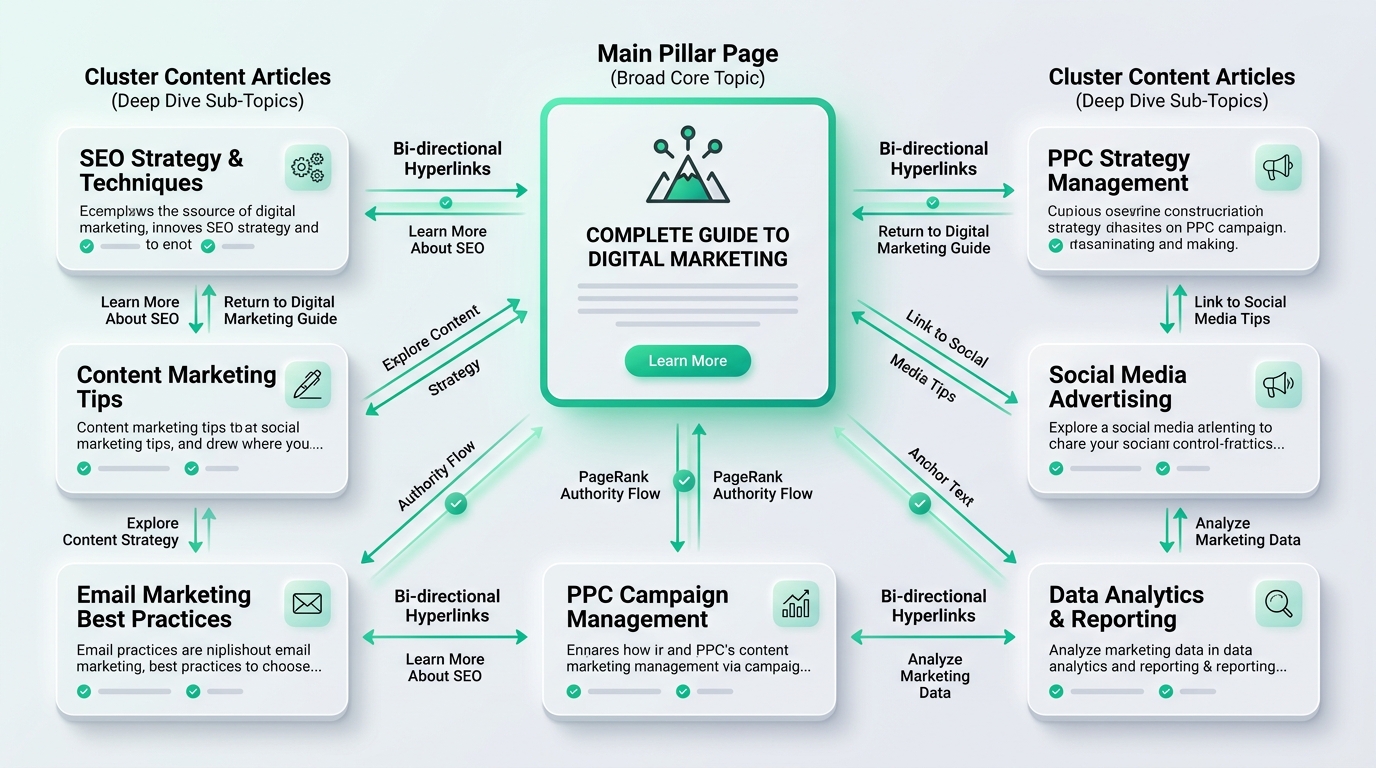
Three golden rules for implementing internal links
To ensure internal links provide maximum SEO impact, follow these three principles:
- Use descriptive and natural anchor text: Avoid generic phrases like "learn here" or raw URLs. Instead, include keywords within the context of the sentence, for example: "before launching campaigns, it is recommended to perform an in-depth website SEO audit to uncover technical barriers."
- In-content links are stronger than footer links: While navigation menus and footers are useful, the search algorithm assigns the highest semantic value to links located within the main body text between paragraphs.
- Avoid "Orphan Pages": These are pages that have no internal links pointing to them from anywhere else on the site. Googlebot considers them unimportant and often excludes them from the index entirely.
Video Tutorial: How to find unused linking opportunities
Watch this Ahrefs expert video guide on how to systematically audit existing pages and find new places to place internal links:
How does proper link architecture help business?
Organizing internal links is not just for the sake of algorithms - it directly improves user navigation and reduces bounce rates. A visitor reading about a specific problem can reach a related solution or service request with a single click.
If your website is complex or contains hundreds of sections, thoughtful website development with correct taxonomy is the foundation for everything. Meanwhile, a regular technical SEO audit will help identify broken links, fix redirect chains, and ensure that every gram of external authority works for your business.
Frequently Asked Questions (FAQ)
How many internal links should be placed in one blog post?
There is no universal number, but a healthy standard is 3 to 5 relevant internal links per 1000 words of text. The key is naturalness - every link should provide the reader with additional value and be closely related to the context, rather than being artificially inserted.
Can I place multiple links to the same page in one article?
Google generally considers only the first anchor text it encounters in the HTML code from top to bottom. Therefore, it is not useful to repeat a link to the same service three times in one paragraph - one well-formulated link is much more effective.
Should I use the nofollow attribute for internal links?
Absolutely not! Internal links should always be dofollow (standard links) so that PageRank authority can flow freely throughout the site. By adding nofollow to internal links, you are intentionally blocking the transfer of authority and weakening your pages.
How should I handle Breadcrumbs?
Breadcrumbs are a mandatory element for e-commerce and content sites. They provide a clear hierarchical link from a product to a category and the homepage, while simultaneously providing Google with structured data (BreadcrumbList Schema), which improves the appearance of search results.
Want to organize your website's internal link architecture and speed up indexing?
Request an SEO audit. We will create a logical cluster structure that passes authority to your most important service pages.
Fixed budget. No hidden fees or forced services.