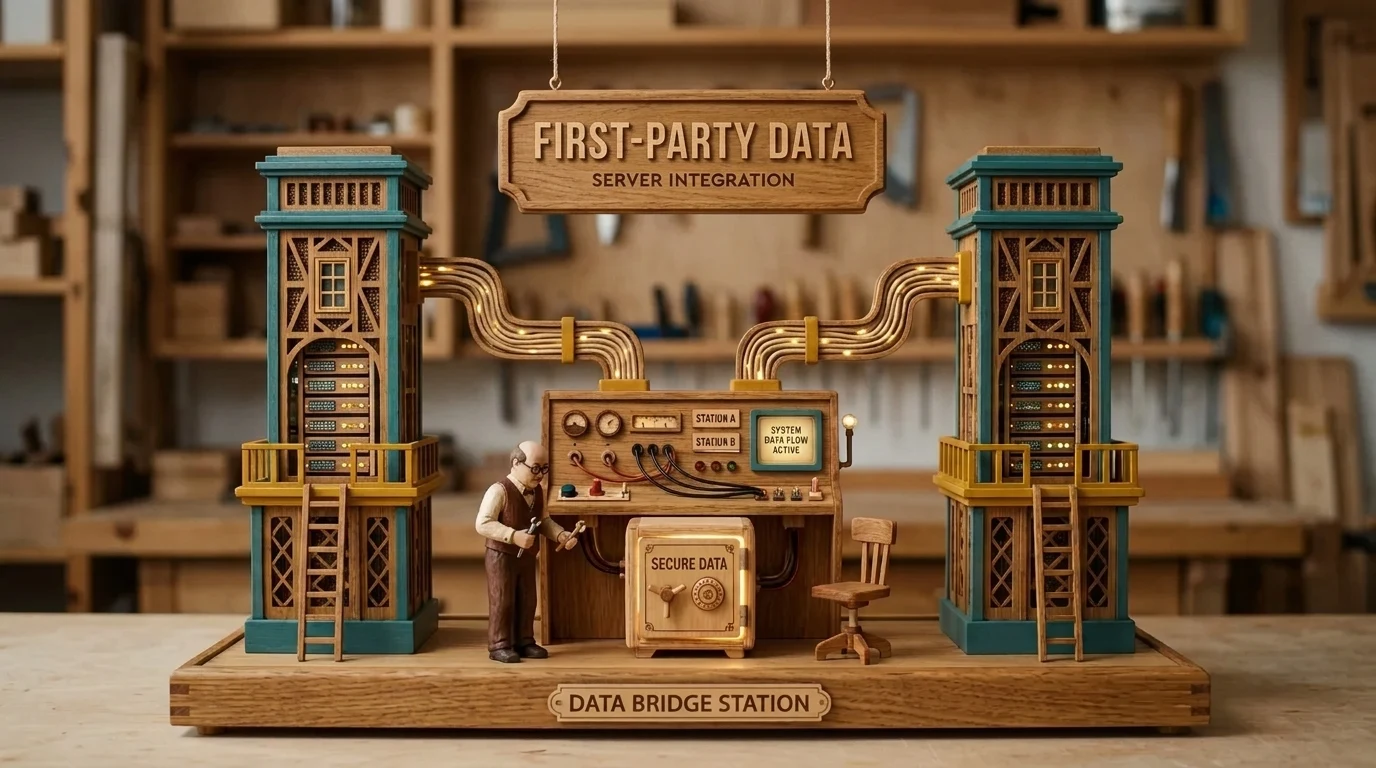
In 2026, Meta algorithms rely exclusively on first-party CAPI signals and strong creative assets, replacing narrow audience targeting. Learn more in our Meta Ads campaign management guide.
Browser restrictions (Safari ITP, ad blockers, and cookie loss) cause the standard Meta Pixel to lose 25-40% of actual purchases and leads. Server-Side Conversions API (CAPI) sends events directly from your cloud server to Meta data centers, ensuring 100% data accuracy and enabling ad algorithms to find high-value customers.
In recent years, advertisers on Meta platforms (Facebook and Instagram) have faced a steady decline in tracking accuracy. Built-in browser tracking protections (Safari ITP, Firefox ETP), ad blockers, and mobile privacy settings block anywhere from 20% to 35% of standard Meta Pixel browser events. As a result, the advertising algorithm receives incomplete purchase data, campaigns optimize based on flawed signals, and customer acquisition costs rise.
The only sustainable long-term solution is implementing independent Server-Side Tracking and Meta Conversions API (CAPI) directly from your own server alongside first-party data.
How Server-Side Tracking Works
In the traditional browser-based model, when a customer completes a checkout, JavaScript running in their browser attempts to send a signal to Meta servers. If the user has an ad blocker active or is using private browsing, this signal is blocked and never reaches its destination.
In the server-side model, the event data flow is fully protected:
- A customer places an order, and the data lands securely on your e-commerce server and database.
- Your server (via server-side Google Tag Manager or a direct API call) sends an encrypted purchase event directly to the Meta Conversions API.
- Browser-based blockers cannot affect this communication, as it takes place between two servers across an independent, secure network.

"If you are running Meta Ads campaigns today without Server-Side CAPI, you are paying full price for incomplete data. The algorithm sees only two-thirds of your actual purchases and assumes your campaigns are performing worse than they really are. Passing first-party data immediately restores visibility to the algorithm and lowers your cost per conversion."
Event Deduplication and Overlap Prevention
To efficiently manage and scale Meta Ads campaigns, configuring event deduplication properly is critical. Because events are sent from both the browser pixel and the server, Meta's system must recognize that they represent the same purchase rather than two separate transactions.
Deduplication is achieved using a unique event identifier (event_id). Both browser and server events are assigned an identical order ID or a randomly generated unique hash:
// PHP example for order completion event with a unique event_id
$event_id = 'order_' . $order->get_id();

// Pushing dataLayer to browser
dataLayer.push({
    'event': 'purchase',
    'ecommerce': {
        'transaction_id': '<?php echo $order->get_id(); ?>',
        'value': <?php echo $order->get_total(); ?>,
        'currency': 'EUR'
    },
    'event_id': '<?php echo $event_id; ?>'
});
When Meta servers receive both events with matching event_id values, the system automatically merges their parameters and counts a single accurate conversion, enriching it with high-quality server data.
First-Party Customer Data Hashing (SHA-256)
Data transmission stability and precise parameter matching are powered by a well-designed Google Tag Manager and GA4 architecture, maximizing your Event Match Quality (EMQ) score. Due to strict privacy compliance, all personal data is encrypted using a one-way SHA-256 algorithm prior to transmission:
- Email addresses are normalized (spaces removed, converted to lowercase) and hashed:
hash('sha256', strtolower(trim($email))). - Phone numbers are standardized with international country codes without spaces or hyphens (+371...) and hashed.
- As a result, Meta can securely match purchases with user profiles without violating GDPR or data privacy regulations.
Frequently Asked Questions About Meta Conversions API (CAPI)
Why is the standard browser pixel no longer enough?
Browsers increasingly restrict third-party cookies, and ad blockers frequently block pixel scripts entirely, preventing Meta's algorithm from learning about completed purchases.
What is event deduplication?
When running both browser pixel and server CAPI simultaneously, each event is assigned a unique Event ID. Meta's system identifies duplicates and counts each purchase only once.
How quickly does CAPI implementation improve campaign ROAS?
Initial performance improvements are typically visible within 2-3 weeks as Meta's machine learning model accumulates up to 30% more conversion signals and optimizes auction bidding.
Looking to stabilize Meta ad acquisition costs and combat ad fatigue?
Schedule a 15-minute intro call. We will review your campaign structure and server data pipelines to build a high-ROAS creative matrix.
Fixed fee structure. No hidden costs or forced service add-ons.