
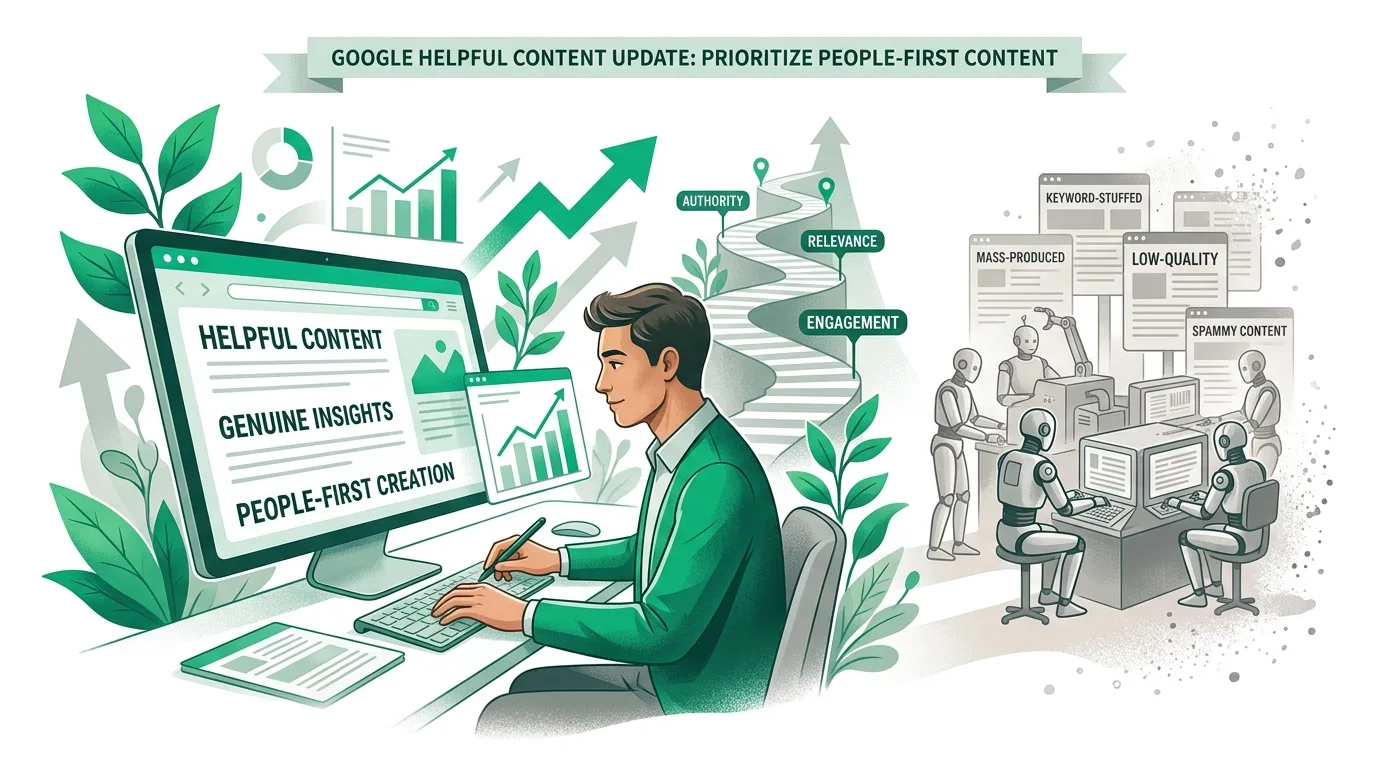
A historical guide from late 2022 regarding the resurgence of people-first content. This principle defines our editorial policy: we do not create artificial, paraphrased text, but rather content with a high Information Gain Score. Learn more about our SEO services.
In the autumn of 2022, the Google Search team introduced one of the most significant fundamental algorithm updates in recent years: the Helpful Content Update. For years, the digital landscape was dominated by an approach that could be called "Search Engine-first" content: long, artificially stretched articles stuffed with keywords, the sole purpose of which was to trick search bots and gain clicks without actually providing the reader with an answer to their question. Google's new system puts an end to this practice by introducing a sitewide signal that lowers the rankings of sites with low-value content.
Key Takeaways
- Sitewide signal: Unlike evaluating individual pages, the Helpful Content system assesses the site as a whole; a large volume of worthless articles can drag down even your best pages.
- People-first content: Content created for a specific audience with genuine practical experience that provides a complete answer is pushed to the top positions.
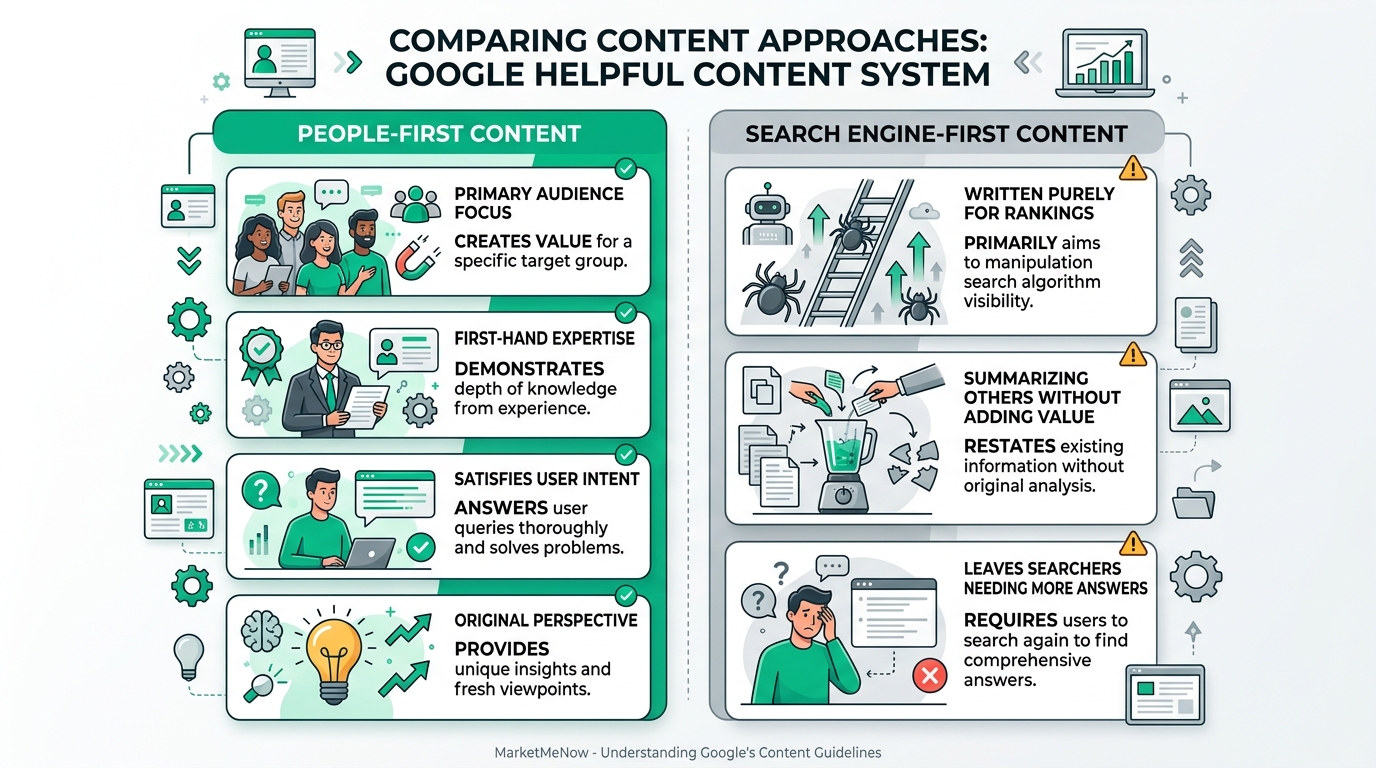
- Penalty for regurgitated content: Articles that simply aggregate information from other search results without adding new value lose visibility.
- Return to search intent: If a user returns to Google search after reading your page to look for an answer again, it is a clear signal of dissatisfaction.
Two approaches to content creation
To understand the new rules of the game, Google invites content creators to honestly evaluate their approach. Are you writing to help your existing and potential clients solve a specific problem, or just because a keyword tool showed a high search volume for a topic your company has no real expertise in?
The comparison below clearly shows the difference between the two approaches and how they are perceived by Google's improved evaluation model:
Signs of unreliable content on your website
Check your company blog and service pages against these four critical points:
1. Excessive topic hopping without clear specialization. If a construction company's blog suddenly features articles about cryptocurrencies or healthy eating just because they are popular queries, Google perceives this as an attempt to manipulate search traffic without genuine authority.
2. Artificial word count inflation. The myth that an SEO article must be at least 2,000 words long is outdated. If a user's question can be answered concisely and thoroughly in 400 words, "fluffing" the text and unnecessary wordiness only degrades the user experience.
3. False promises in headlines. Headlines that promise unanswerable things (e.g., "Release date of the movie's second part" when no official announcement has been made) mislead the visitor and create a high bounce rate.
4. Lack of original conclusions and examples. Rewriting the first three Google results from other authors with slightly different words no longer works. Google's algorithms are becoming smart enough to detect information duplication and prioritize the original source.
Official explanation of the Helpful Content update
Listen to the direct message and advice from the Google Search Central team on how to think about content helpfulness:
How to create content that succeeds in the new environment
To gain long-term immunity against algorithm fluctuations and attract loyal clients, focus on three pillars:
Share real experience: Describe the behind-the-scenes of your projects, mistakes made, specific solutions, and client challenges. This information cannot be copied or generated artificially.
Implement visual clarity: Structure text with clear headings, short summary blocks, original charts, and diagrams that help the reader grasp the essence quickly.
Solve the problem completely: Ensure that after reading your material, the user feels they have received an answer and knows exactly what the next practical step is.
Quality content development and a proper technical foundation are the basis of modern search optimization. If you want to create a content strategy that actually works, check out our SEO services or contact our specialists.
Frequently Asked Questions about the Helpful Content update
Should I delete old, short, and low-value blog posts?
How quickly can a site recover if it has been hit by a Helpful Content penalty?
Does this update mean SEO keyword research is no longer needed?
Want to create content that truly engages the reader while dominating search rankings?
Book a 15-minute strategy call. We will help you develop a high-value content plan.
Fixed budget. No hidden fees or forced services.