
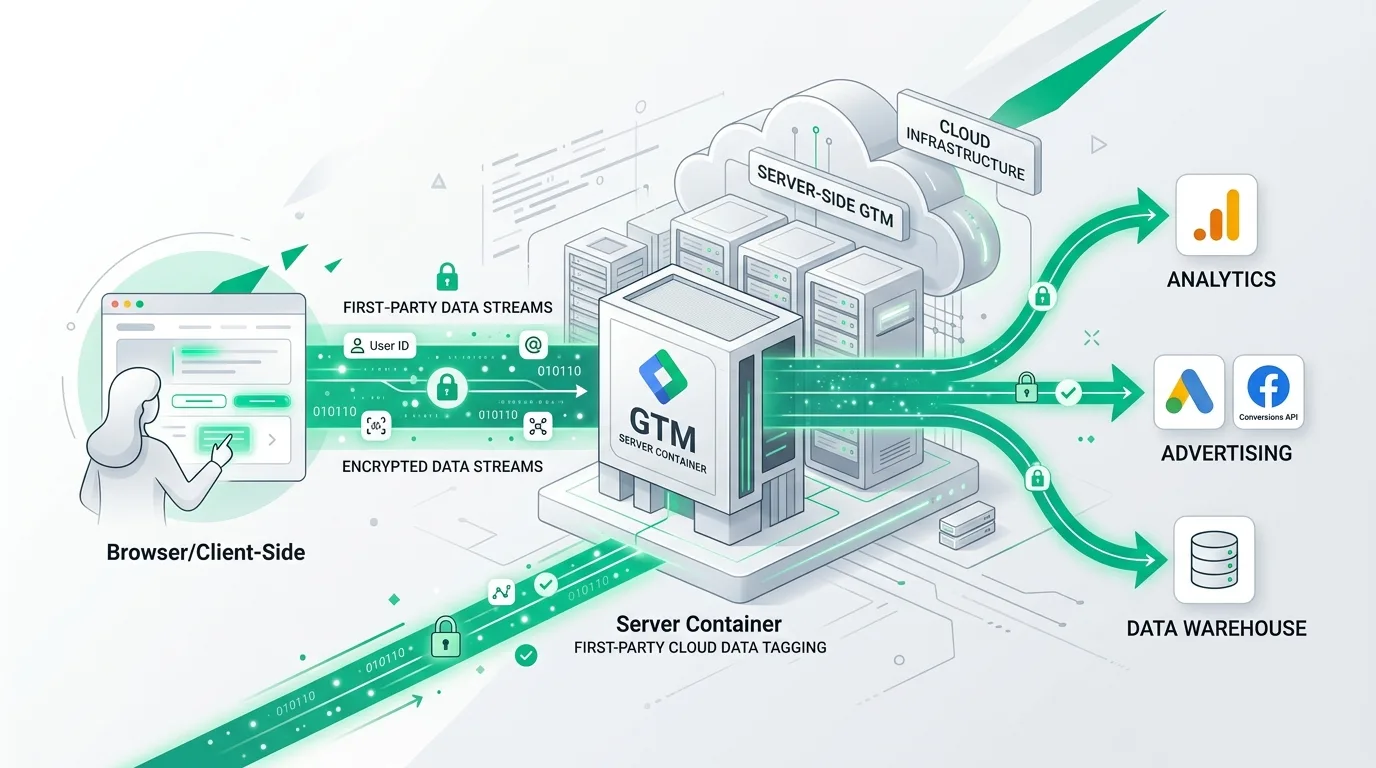
A historical analysis of implementing Server-Side tagging as an industry standard. By moving data processing from the user browser to the server, website speed is improved and 100% data privacy is ensured. Learn more about our data analytics and integration services.
For more than a decade, digital marketing relied on a simple principle: dozens of third-party scripts were loaded onto websites, sending data directly from the user browser to Google, Meta, TikTok, and other ad networks. However, by 2022, this model was permanently broken. Apple Safari ITP restrictions, ad and tracking blockers (AdBlock), and stricter privacy requirements mean that businesses today lose 20-40% of their actual conversion data. The solution is Server-Side Tagging - moving data processing to your company cloud server.
Key Takeaways
- Browser Offloading: Instead of multiple heavy third-party libraries, the browser sends only a single lightweight data request to your server container.
- First-Party Cookie Protection: Cookies set from your own subdomain (e.g., data.yourstore.com) are not subject to Safari's 7-day deletion restriction.
- Data Control and Privacy: You decide which user data to pass to advertising platforms and what to anonymize or completely block before forwarding.
- Direct Meta CAPI Integration: Server-side GTM ensures seamless Facebook Conversions API connectivity without installing complex additional plugins.
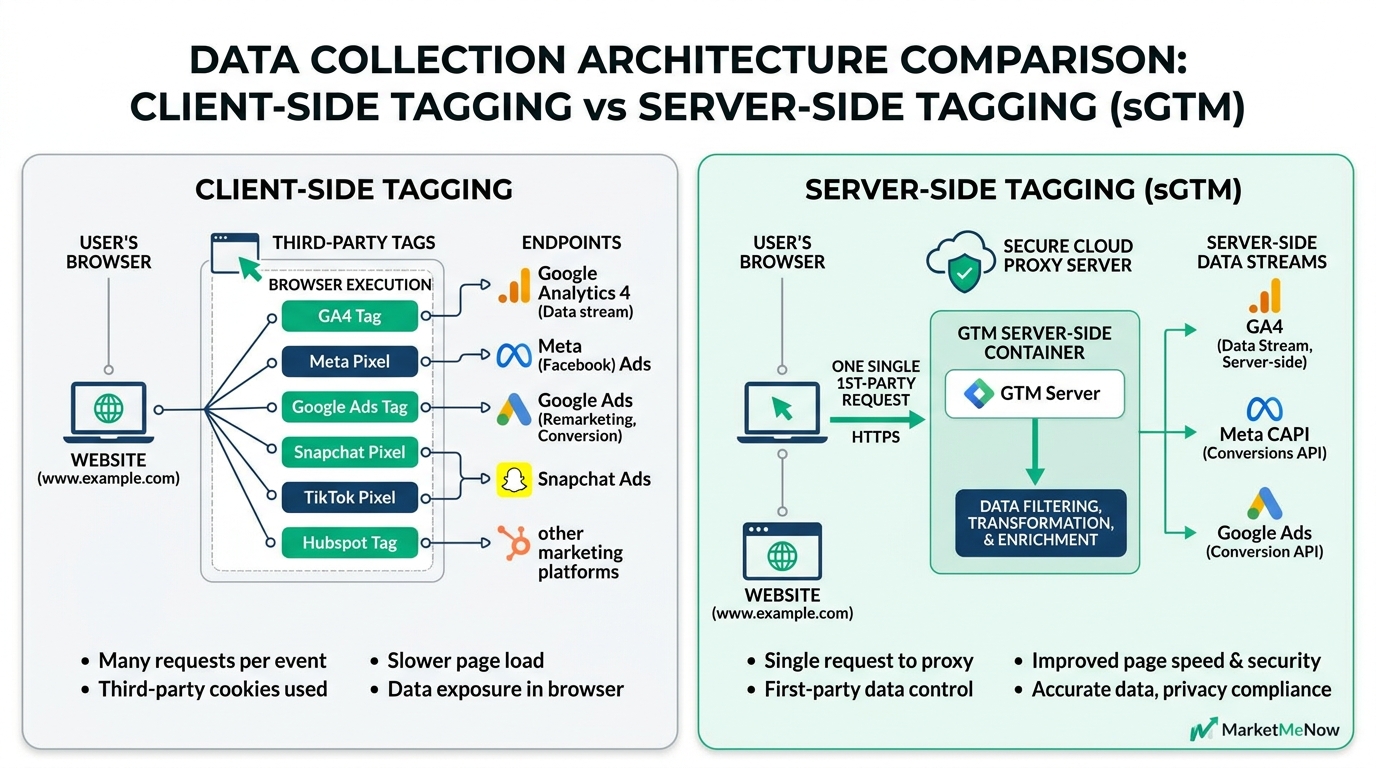
Client-Side Versus Server-Side Architecture Comparison
In the traditional setup (Client-Side Tagging), every user click means that the visitor phone or computer simultaneously makes separate network requests to Google Analytics, Meta Pixel, Hotjar, Google Ads, and other services. This not only consumes device processor resources and slows down page load times, but also exposes data to external risks.
In server-side tagging, the browser communicates exclusively with your private GTM server container (usually hosted on Google Cloud Platform or another cloud service). This server acts as a security gateway and data filter: it receives the event, processes it, strips sensitive information, and then sends the necessary data from server to server to the respective destinations.
Three Main Benefits for Your Business Digital Growth
1. Website Page Load Speed and Core Web Vitals. By removing heavy JavaScript codes from the browser, Total Blocking Time (TBT) decreases significantly and Google speed scores improve, directly impacting both SEO rankings and user conversion rates.
2. More Accurate Advertising Campaign Optimization. Because data is sent through a first-party subdomain, ad blockers do not perceive it as third-party trackers. Meta CAPI and Google Ads receive 15-25% more confirmed purchase and lead data, allowing smart bidding algorithms to work much more profitably.
3. Security and GDPR Compliance. When using client-side pixels, companies often do not even know what exact data third-party libraries read from the page. On the server side, you gain 100% control over every parameter before it leaves your infrastructure.
Video Guide on the Essence of Server-Side Tagging
To gain an in-depth understanding of server container operating principles and technical logic, watch this expert video analysis by Analytics Mania:
How to Prepare for the Transition to Server Infrastructure
Transitioning to server-side tagging requires thoughtful preparation. First, you need to set up a cloud server environment (such as Google Cloud Platform Cloud Run or a specialized Stape server). Next, configure a custom DNS record to establish a first-party subdomain.
The following step is synchronizing the data flow between GA4 and advertising platform APIs. This approach ensures your business digital analytics becomes resilient against future browser limitations.
If you want to organize your website analytics architecture and speed up website performance, learn more about our website development and technical optimization solutions or consult with our team.
Frequently Asked Questions About Server-Side GTM
How much does server-side GTM cloud hosting cost?
Is the standard client GTM container no longer needed after implementing server GTM?
How does server tagging help fight ad blockers?
Want to implement secure Server-Side data analytics on your website?
Book a 15-minute call. We will help you configure server-side tagging and Meta CAPI.
Fixed budget. No hidden fees or forced services.