
In 2026, the search landscape has changed irreversibly: content is evaluated based on direct citability in ChatGPT, Perplexity, and Gemini search engines. Learn more about our SEO and GEO services.
June is the most strategically advantageous moment for a company's digital content audit. During the first six months of the year, Google algorithm updates have usually stabilized, and search analytics clearly highlight pages that have lost positions to competitors or AI answers. In this article, we provide a practical methodology for content inventory, fact-refreshing, and recovering organic traffic without the need to write everything from scratch.
Why Updating Existing Content is More Effective Than Creating New Pages
Many marketing managers believe that increasing search traffic requires continuous publication of new articles. However, in reality, existing pages already hold valuable historical authority and backlinks. If they lose rankings, the reason is most often outdated information, missing search intent, or more in-depth content from competitors.
As proven by our content and SEO optimization practice, updating 10 to 15 strategically important pages with fresh data and clear answers can achieve a significantly faster ranking jump than new content that has yet to gain authority.
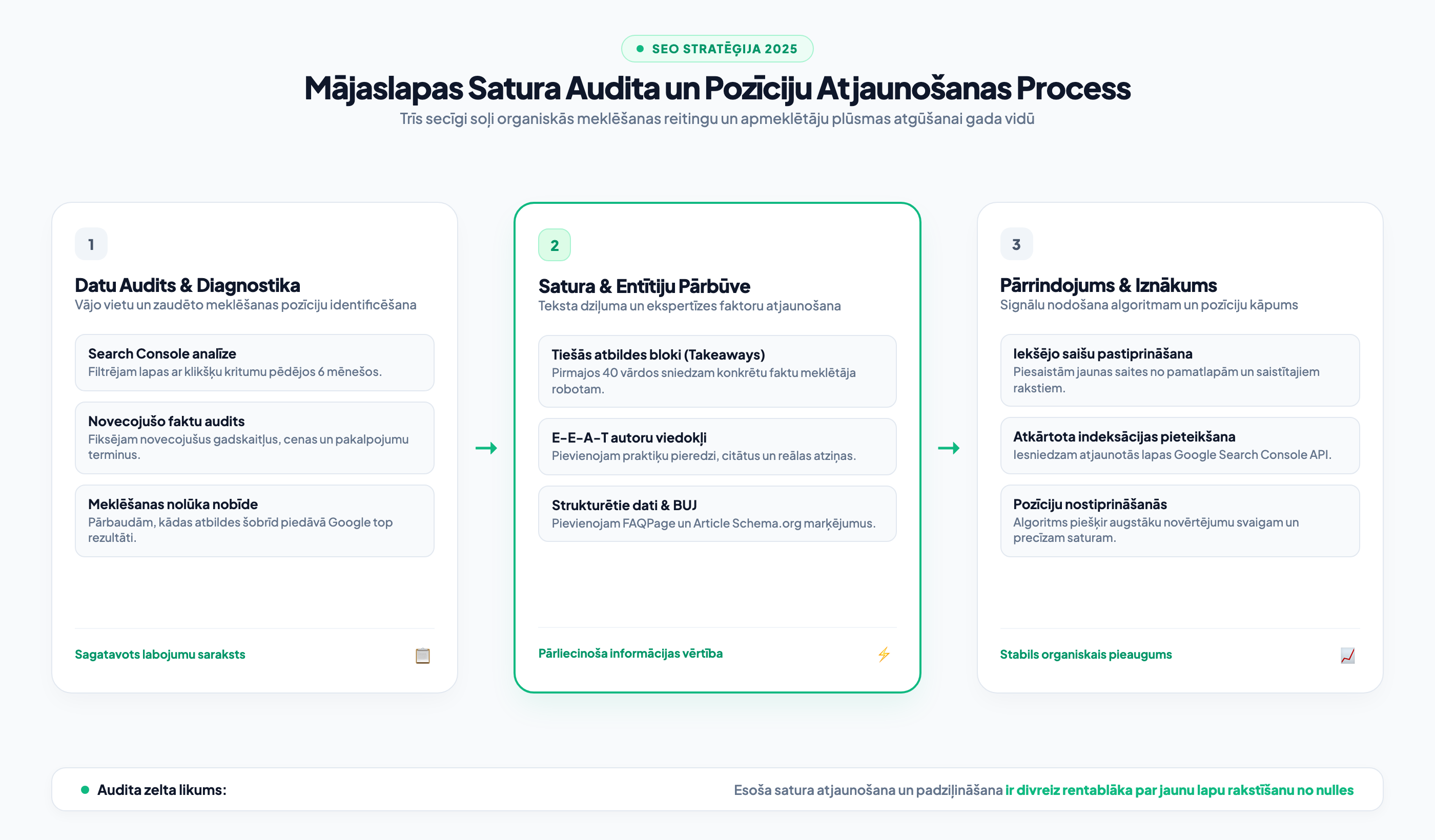
Step-by-Step: Content Audit in Google Search Console
The audit begins with simple data filtering. In the Search Console 'Search Results' section, compare the last 3 months with the previous period and select the pages where impressions or clicks have decreased the most. Next, a content inventory is performed for each article:
- Fact and Date Audit: Replace outdated years and references to older regulations with the current 2025 reality.
- Inserting Direct Answers: Add a short summary block at the very top so that search engines and AI assistants can use it in featured snippets.
- User Experience and Visual Layout: If the text is an unreadable wall of content, transform it into readable cards, lists, and clear infographics.
Often, content aging is also related to overall design and code obsolescence. In such cases, a thoughtful website code and structure modernization allows for the simultaneous improvement of both technical speed and readability.

“The mid-year point is the best time to open Search Console and face the truth. Refreshing content with the latest data takes half the time of creating new articles but provides an immediate boost in rankings.”
Reviewing Internal Links and Re-indexing
As we discussed in detail in our guide on how to perform a full SEO audit, the strongest internal lever is linking. Once the page content is updated, add links to it from the company's latest articles and main service pages using precise anchor texts.
Finally, request the Google bot to recrawl the updated page via the URL Inspection tool. In most cases, the algorithm notices the changes within a few days and positively adjusts the positions in search rankings.
- Top 5 Declining Pages: Find the five pages with the largest drop in visitors in Search Console.
- Outdated Data: Check if they mention old prices, expired promotions, or past years.
- Structured Data: Use the Rich Results Test to check if the updated page has any markup errors.
Frequently Asked Questions About Content Refreshing
Should I change the article URL after updating the content?
Under no circumstances should you change the URL unless it is absolutely necessary. By keeping the existing URL, you preserve all historical external links and authority.
How often should such a content audit be performed?
The optimal frequency is twice a year: in June (mid-year review) and in December/January (preparing for the new season).
What to do with articles that generate zero clicks?
If the topic is outdated and unimportant, it is better to merge it with another stronger article and redirect it with a 301 redirect, thereby reducing content fragmentation (Content Pruning).
Want to strengthen your brand authority in Google and new AI search engines?
Book a 15-minute strategic call. We will perform a site SEO and GEO diagnostic, preparing your content for artificial intelligence answer indices.
Fixed budget. No hidden fees or forced services.