

The August 2023 and subsequent core updates marked the end of mass low-quality AI content farms. Websites that maintain and grow their rankings stand out through genuine author experience (E-E-A-T), fast server response times, and content that genuinely solves the user's problem. Check out our SEO audit and recovery services.
On August 22, 2023, Google officially announced the rollout of the August 2023 Core Update. Such comprehensive core updates always cause significant turbulence in search results worldwide. While some businesses see a pleasant boost in organic traffic, others wake up to a 30 to 50 percent drop in visitors. In this guide, we will look at what is actually happening under the hood of the search engine and how to act in order to maintain your positions.
Key Takeaways
- First major summer correction: The August 2023 Core Update is the second global core update this year, and its rollout takes about two weeks.
- Not a penalty, but a re-evaluation: Core updates do not penalize sites for technical errors, but globally re-evaluate which content best satisfies user search intent.
- Ban on panic fixes: During the algorithm rollout, you should not chaotically delete pages or change site structure; objective analysis is only possible after fluctuations subside.
- E-E-A-T and user experience: The biggest winners are sites with authentic author experience, unique data, and clean, readable content without intrusive distractions.
What is a Google Core Update and Why the Algorithm is Regularly Updated
Unlike targeted updates (such as the Spam Update or Helpful Content Update), a core update affects the core of the search engine. Google compares this to updating a best movies list: a movie that was at the top two years ago has not become worse today, but new and superior works have been released in the meantime that deserve a higher spot.
The main goal of a Core Update is to better understand human Search Intent and ensure that the top positions in search provide the most complete, reliable, and convenient answer.
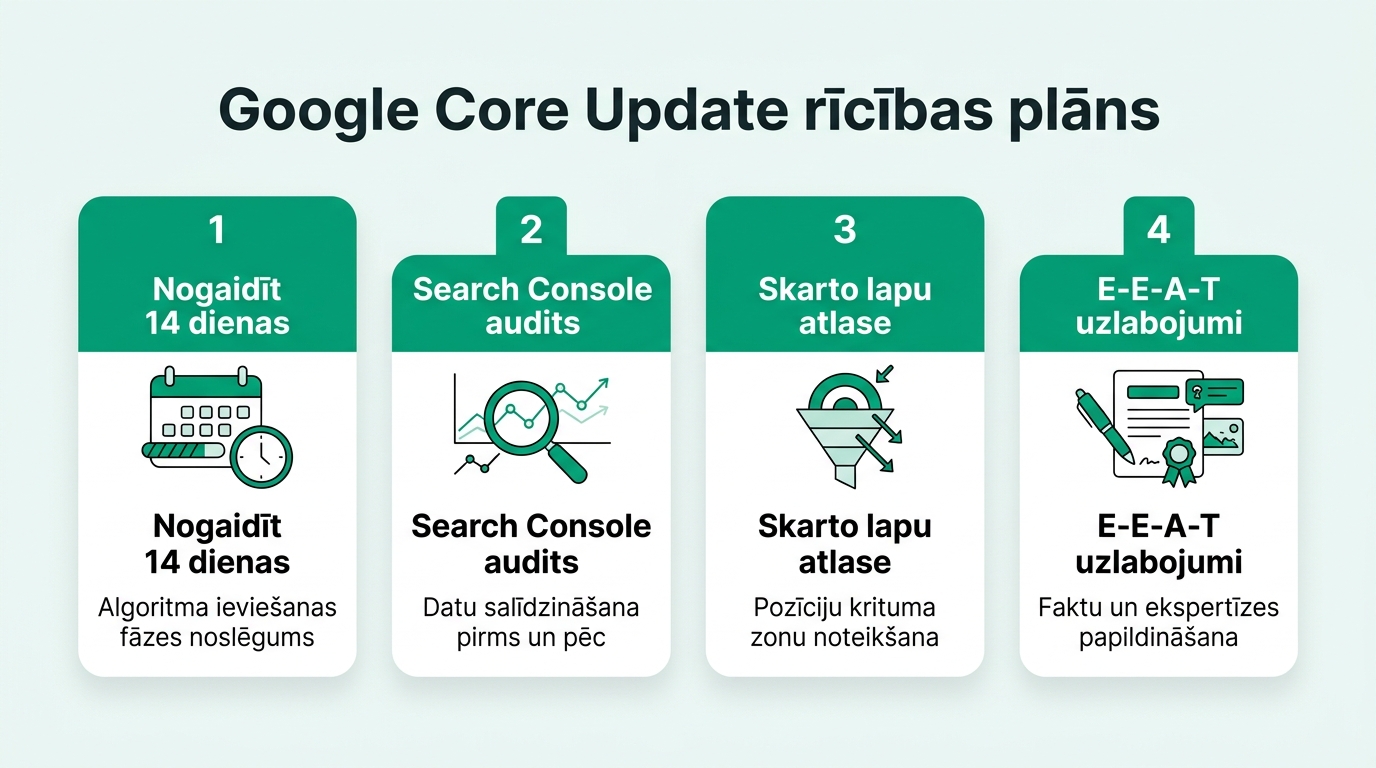
A Four-Step Strategy to Overcome Ranking Fluctuations
If your website traffic is fluctuating (similar to situations we analyzed regarding the Google helpful content update), follow this plan:
1. Stay calm and wait for the rollout to finish: Core update rollouts typically take 10 to 16 days. During this period, data centers synchronize, and rankings can jump up and down daily. Do not make drastic changes to your site until Google announces the completion of the update.
2. Analyze data in Google Search Console: Compare the last 28 days of data with the previous period. Find out which specific pages and keywords have lost positions. Often, the drop affects only a few outdated articles rather than the entire website as a whole.
3. Study the new TOP 3 competitors: Look at which pages have taken your previous spots. What is their content format? Do they have better tables, clearer answers, fresher data, or a more convenient mobile layout?
4. Implement quality content and usability improvements: Enrich your content with real experience, remove unnecessary fluff, update old figures, and improve page load speed.
E-E-A-T Audit: Quality Content Creation and Self-Assessment
In its Quality Rater Guidelines, Google places strong emphasis on E-E-A-T (Experience, Expertise, Authoritativeness, Trustworthiness). Evaluate your website against these criteria:
| Factor | What the Evaluator Assesses | Typical Weak Point | Recommended Solution |
|---|---|---|---|
| Experience | Author's personal practical contact with the topic | Generic theoretical text without examples | Add personal observations, photos, real data |
| Expertise | Professional knowledge and competence | Anonymous author without biography and links | Clear author profile with an experience description |
| Authoritativeness | Industry recognition and citability | No other source links to the website | Earn natural links from industry media |
| Trustworthiness | Site security, accuracy, and transparency | Missing company details, privacy policy, contacts | Proper footer with company details and secure HTTPS |
Common Mistakes That Make Websites Vulnerable to Updates
Main reasons why pages lose positions during core algorithm changes:
Artificially generated mass content: If a website publishes hundreds of raw AI-generated articles without human review and editing, the algorithm quickly identifies the low value and reduces the trustworthiness of the entire site.
Intrusive ads and pop-ups: Pages where users have to close three banner ads or subscription pop-ups on a mobile device before accessing the main text are considered user-unfriendly.
Frequently Asked Questions
How long does it take to recover lost positions?
If you make substantial content and technical improvements, recovery typically takes from 1 to 3 months, often waiting for the next algorithm recalculation.
Can a detailed technical SEO audit help after a Core Update?
Yes, because speed, proper indexing, and mobile usability are integral parts of the overall user experience.
Is it worth rewriting all website articles at once?
No, focus on the most important pages that have undergone full website SEO optimization and have historically generated the most visitors and leads.
Conclusions and Next Steps
The Google August 2023 Core Update serves as yet another reminder that SEO is not a one-time trick, but a continuous quality improvement process. Do not panic at the first signs of fluctuation. Wait for the algorithm rollout to fully complete, calmly analyze the data, and strengthen the real value of your content for the reader.
Has your website been hit by Google core algorithm updates?
Book a 15-minute audit consultation. We will diagnose the causes of the drop and create a concrete recovery plan for your rankings.
Fixed budget. No hidden extra fees or forced services.