
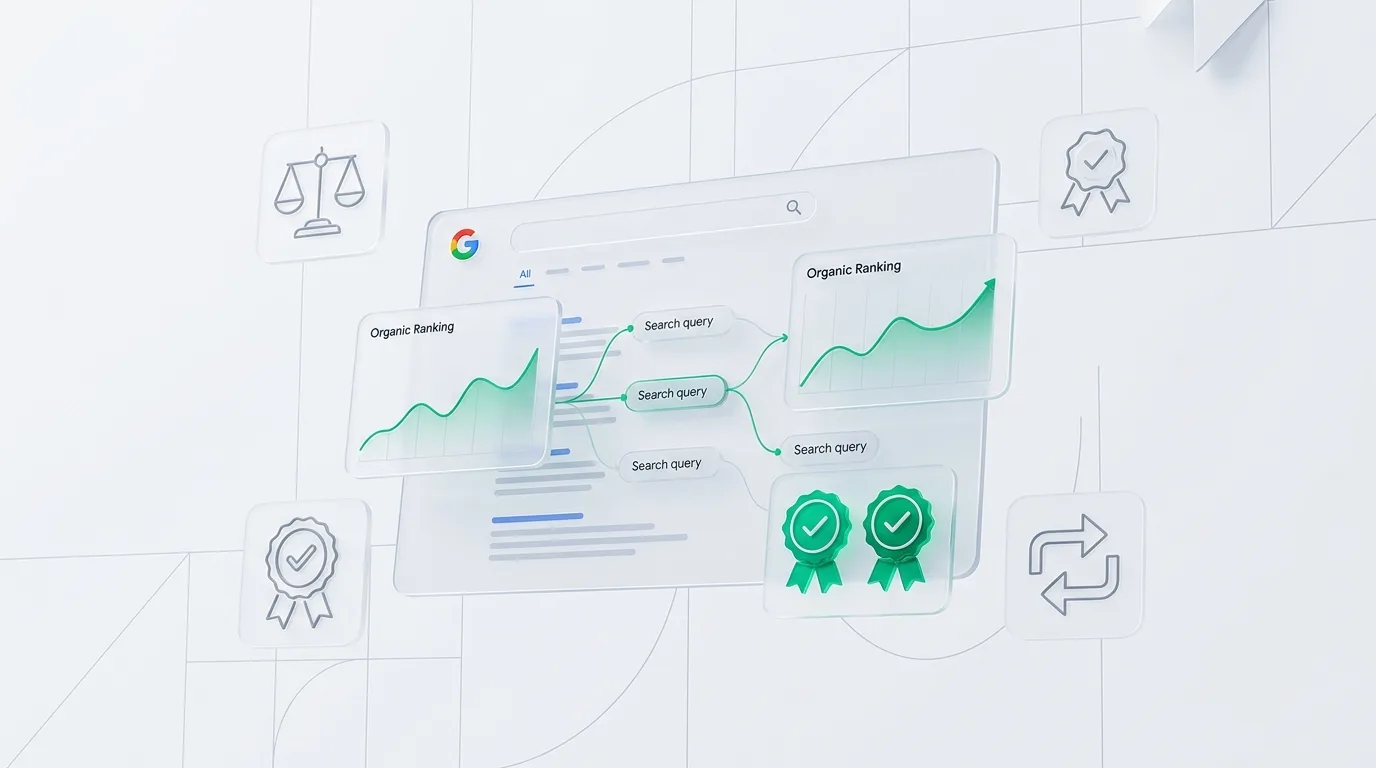
A historical audit of the December 2020 update. In the event of algorithm fluctuations, the golden rule remains: do not make chaotic changes in a panic. Instead, wait for the data to stabilize and conduct a systematic audit. If you want to check the technical and content status of your website, see our Website SEO Audit.
Key Takeaways
- December Surprise: On December 3, 2020, Google launched its third and most significant core algorithm update of the year (December 2020 Broad Core Update).
- It is not a penalty: A Core Update is not a punishment for errors or spam; Google is simply re-evaluating which content best and most comprehensively answers the user's search intent.
- Do not touch anything for 14 days: While the update rolls out globally, data centers experience turbulence. Hasty rewrites or URL changes during this time only worsen the situation.
- Action Plan: Wait for the turbulence to end, evaluate the differences in lost and gained queries in Google Search Console, and improve content authority (E-A-T) and usability.
Imagine a librarian who rearranges all the bookshelves every six months. A gardening book that previously stood in the center is suddenly moved to the second row, not because it contains errors or torn pages, but because a newer, more modern edition with color photos and more practical instructions has just been released. This is exactly the principle by which Google's major algorithm updates operate.
On December 3, 2020, Google announced the December 2020 Broad Core Update. It caused significant anxiety worldwide because the update was launched right at the peak of Christmas shopping. Many website owners, noticing fluctuations in search results, began panicking by changing texts, deleting sections, and modifying links. That is the biggest mistake you can make at such a moment.
Why is waiting calmly the best tactic, and how do you properly audit a website after the algorithm stabilizes? Let us look at it step by step.
How do Core Updates differ from other updates?
In a previous article, we discussed how historical Google filters like Panda and Penguin fought against low-quality content and artificial links. Unlike these targeted filters, a Broad Core Update is not directed at any specific violation.
Google officially emphasizes: if your site has lost positions after an update, it does not mean it is "broken" or has received a penalty. It only means that for specific search queries, another resource is currently offering a better, fresher, more reliable, or more user-friendly answer.
Overview: How to act and what to avoid during algorithm turbulence
Here is a structured comparison between typical panic reactions and thoughtful, professional action:
| Phase | Incorrect Action (Panic) | Correct Action (Strategic Calm) |
|---|---|---|
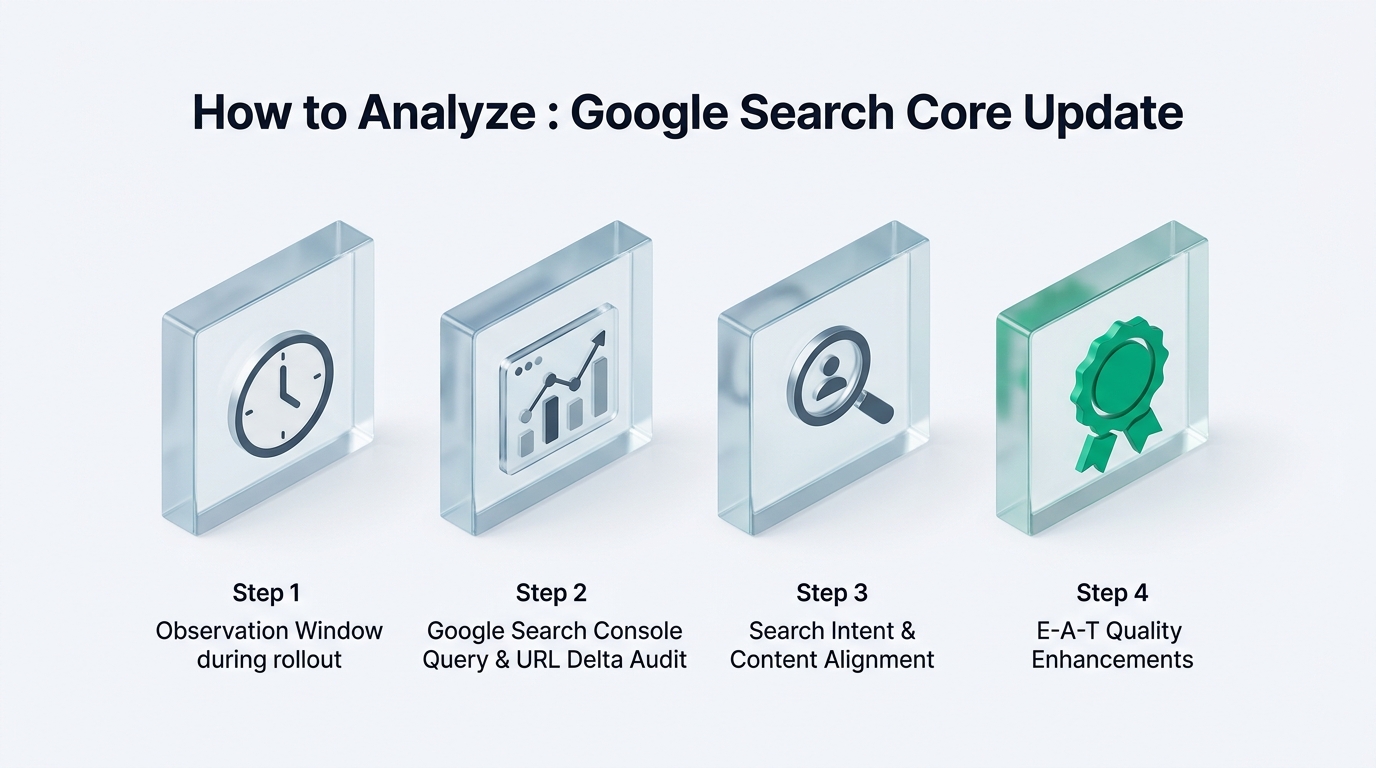
| Days 1-14 (During rollout) | Rewrite article titles, change URL structure, rush to buy backlinks. | Record data but make no significant changes; allow data centers to synchronize. |
| Data Evaluation | Evaluate only total traffic or daily fluctuations of individual keywords. | Compare click and impression differences (deltas) for specific pages and queries in Google Search Console. |
| Content Audit | Stuff articles with more keywords or artificially increase word count. | Compare your content with the new TOP 3 competitors: is their answer clearer, faster, and more useful? |
| Long-term Focus | Search for "secret SEO schemes" and quick hacks. | Strengthen E-A-T (authority and industry expertise) and prepare for 2021 page speed standards. |
4-step action plan after an algorithm update
Once Google announces that the update rollout is fully complete (usually 10-14 days after the start), you can begin a structured analysis:
1. Data comparison in Google Search Console
Open Search Console and compare the last 14 days with the period before the update. Use filters to identify:
- Which specific pages have lost clicks and impressions?
- In which specific search queries has the position decreased?
It often turns out that the drop has not affected the entire site, but only 2-3 specific articles or service pages where competitors have created stronger content.
2. Search Intent Audit
Enter the queries where you experienced a drop into the search engine and carefully look at the new first-page results. What type of content is there now?
- If the user is looking for information and comparison, but your page offered only an aggressive sales form - the search intent has not matched.
- If competitor pages have clear tables, calculators, or video explanations, but you only have a long block of text - the user experience needs to be improved.
3. Strengthening E-A-T (Expertise, Authoritativeness, Trustworthiness)
Ensure that every piece of content clearly indicates a real author with industry experience, includes sources, contact information, and clear company details. Especially in sectors that affect human health or finances (YMYL - Your Money or Your Life), trust signals are crucial.
4. Preparing for Core Web Vitals and page speed requirements
Google has already announced that a new ranking signal will take effect in May 2021 - Page Experience, which will measure page loading speed (LCP), interactivity delay (FID), and visual stability (CLS). Use this quiet period to optimize images and tidy up the technical health of your site.
As we always remind our partners - Google algorithms are not trying to make life difficult for business owners; their only task is to show the searcher the most useful answer. If your focus is on truly helping your client, rather than short-term manipulation, every subsequent update will benefit your growth. If you want to perform a professional website SEO audit, do it with clear methodology and data!
Frequently Asked Questions about Google algorithm updates
How often does Google perform these major updates?
Typically, core updates occur 2 to 4 times a year. Between these major steps, Google makes dozens of small algorithm adjustments daily, which are usually not individually noticeable.
How long does it take to recover lost positions?
Significant position recovery usually happens during the next Core Update (after several months), when algorithms re-evaluate the content of all websites. Therefore, improvements must be made systematically and in a timely manner.
Can changing the site design help regain rankings?
Only if the new design makes the content easier to read, removes intrusive banners, and improves page loading speed on mobile devices. A design change by itself, without content quality, does not change positions.
Need an independent website SEO audit after Google updates?
Request an in-depth audit. We will check your site's indexing, technical health, content authority, and provide clear recommendations.
Fixed budget. No hidden fees or forced services.