
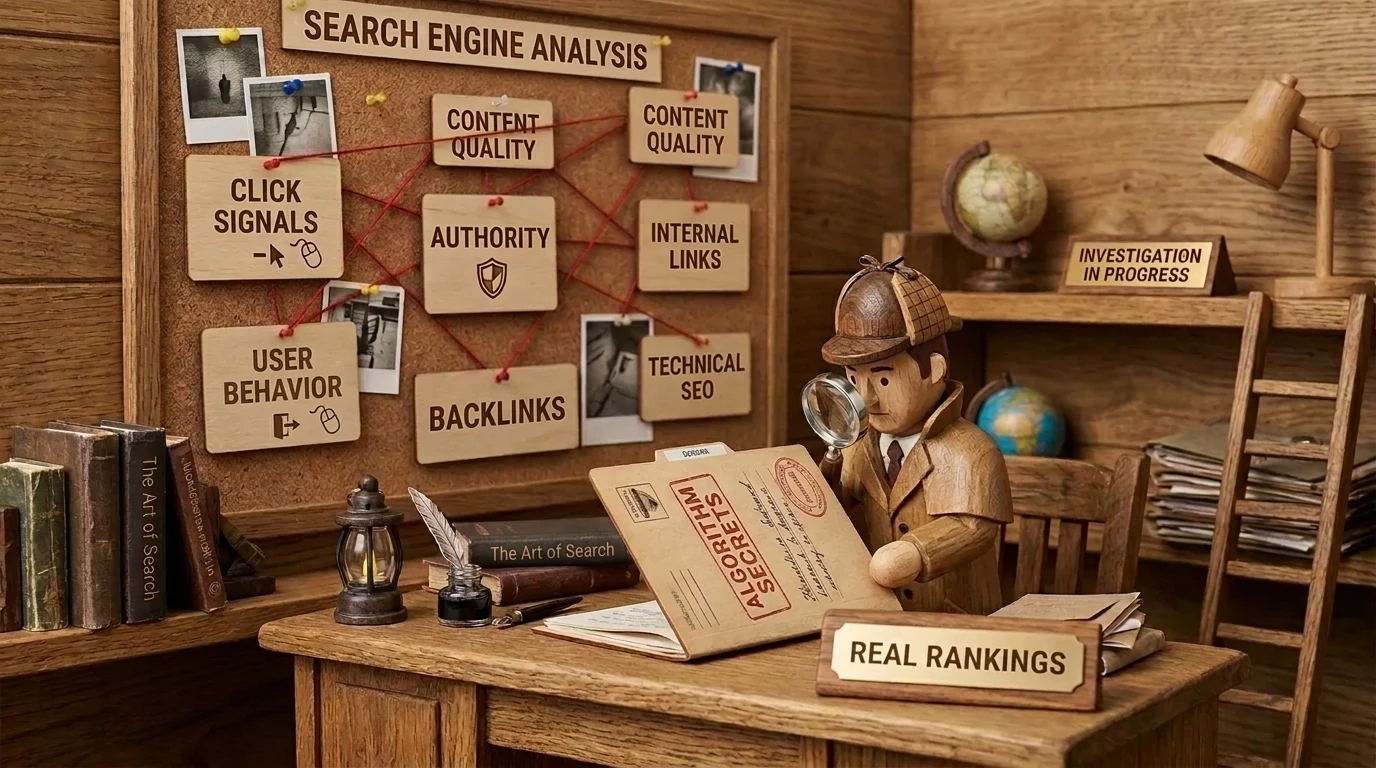
The Google search algorithm leak in the summer of 2024 revealed numerous factors that the SEO industry previously only suspected. By 2026, it is clearly proven that real user behavior (clicks, scrolling, dwell time) and domain authority are far more important than simple keyword density. Learn more in our technical SEO audit services.
In late May 2024, the SEO industry experienced a true earthquake: thousands of Google internal search architecture documents (Search Content Warehouse API) were published on a GitHub repository due to an error. The documentation, the authenticity of which Google later officially confirmed, includes 2,596 modules and 14,014 data attributes. This leak provided the first direct insight into how the search giant actually evaluates websites. Many claims that Google representatives publicly denied for years turned out to be real, functioning algorithm modules in the documents.
Key Takeaways
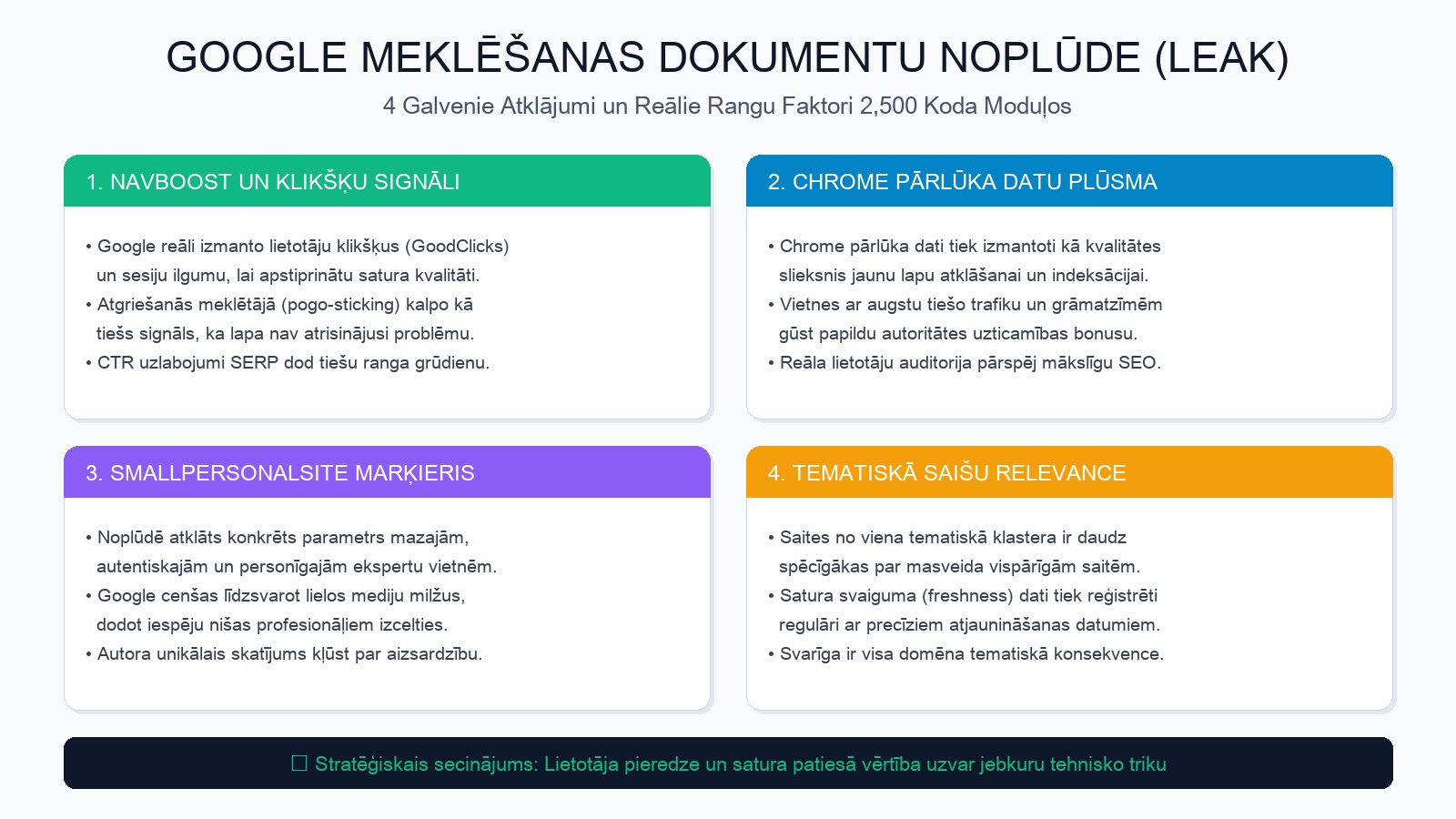
- The largest data leak in Google history: In late May, Google's internal 'Content Warehouse API' documents became public, containing 2,500 modules and over 14,000 attributes.
- NavBoost and click data are reality: The documents prove that Google has been using user click data (GoodClicks, BadClicks, pogo-sticking) and click history for direct ranking for years.
- Chrome browser data integration: The leak confirms that Google analyzes page views and quality using Chrome browser user traffic.
- smallPersonalSite and the power of thematic links: The algorithm contains markers to highlight small, authoritative blogs and evaluates links based on their thematic relevance, not just raw PageRank count.
Four major discoveries that change the understanding of SEO
The analysis of the documents reveals several essential mechanisms:
1. NavBoost system and user clicks: Google representatives claimed for years that clicks and user behavior were not used for ranking. The leak reveals the exact opposite: the 'NavBoost' system is one of the most powerful ranking engines. It registers 'GoodClicks' (a click with a long dwell time on the page) and 'BadClicks' (immediate return to the search engine, or pogo-sticking). If searchers click on your page and immediately return, your ranking is rapidly downgraded.
2. Chrome browser user data: The documents contain a module that counts page visits from Chrome browser users. This data is used to discover new URLs and determine the true popularity of a site beyond search queries.
3. smallPersonalSite attribute: A surprising discovery is the special 'smallPersonalSite' marker, created to provide algorithmic support to independent authors and small sites, protecting them from the monopoly of large corporate media.
4. Thematic relevance of anchor text: Links from sites within the same thematic field have incomparably more weight than random links from unrelated resources.
Myths vs. Reality: What the leak changes in daily work
Here is a direct comparison between official statements and the actual code architecture:
| Factor | What Google said publicly | What the code documents reveal | Conclusion for site owners |
|---|---|---|---|
| User clicks and CTR | We do not use clicks as a ranking factor | NavBoost system stores click data for the last 13 months | Titles and meta descriptions must be excellent to encourage clicks |
| Domain age and reputation | All domains compete equally | The system registers 'hostAuthority' and separate 'site2site' metrics | Brand recognition and domain history are a huge advantage |
| Content freshness | Only quality matters | The algorithm registers the last update date and volume of content changes | Regularly update existing articles with new data |
| Author authority | There is no specific author rating | The documents contain 'isAuthor' and author attribution modules | Real authors with bios and expertise must be clearly indicated |
These facts confirm that a modern comprehensive SEO strategy must not be limited to keyword density - the main focus must be on the real user experience.
Practical steps for adapting content to the new reality
Given the data from the leak, here are three practical recommendations:
1. Optimize the 'GoodClicks' rate: Ensure that the page content solves the searcher's query above the fold. Remove annoying pop-ups that force the user to close the tab immediately. Here, structured user behavior analysis with scroll depth checking helps.
2. Build a strong brand identity: Since Google evaluates direct traffic and brand searches, invest in recognition. A brand that people search for by name receives a higher 'hostAuthority' rating.
3. Organize your internal link network: Anchor texts in internal links provide the algorithm with clear context about the page's importance. Similar to our analysis on the top 10 content optimization techniques for boosting article positions, internal architecture is the foundation for all domain power. A professional technical SEO audit helps verify all of this.
Frequently Asked Questions
Does the leak mean the rules of the SEO game have completely changed?
No, the basic principles remain the same: quality content and links are still important. However, the leak confirms that user behavior and brand recognition are much more significant than Google wanted to admit.
Will Google change the algorithm because of this leak?
Google is constantly updating its systems, but the core infrastructure (like NavBoost and the data warehouse) has been built over decades and cannot be replaced overnight.
Do social media signals help with ranking?
Social media links are typically 'nofollow', but the traffic generated by social networks and Chrome browser visits provides the algorithm with an indirect confirmation of quality.
Conclusion
The Google algorithm leak tore away the veil of secrecy and revealed the truth: the search engine rewards sites that are loved by real users. By creating content that truly helps the reader and encourages them to stay on the site, you naturally fulfill all the complex code criteria.
Want to build SEO on real Google ranking factors, not guesses?
Book a 15-minute call. We will discuss real authority and click signals for your site's organic growth.
Fixed budget. No hidden fees or forced services.